
While the recent conflict between the U.S. and Iran is front and center in early March and will no doubt have a massive impact on the midterm election cycle, domestic issues must continue to be addressed, and President Donald Trump is doing exactly that on healthcare policy.
As unflashy of an issue as healthcare is, it repeatedly polls in the top three to four issues for voters. In the latest Economist/YouGov survey from Feb. 27 – March 2, healthcare comes in as the third most important issue to voters, with 11 percent of Americans ranking healthcare as their number one priority. Twenty-two percent rank inflation/prices as their top priority and 14 percent rank the economy as their top priority.
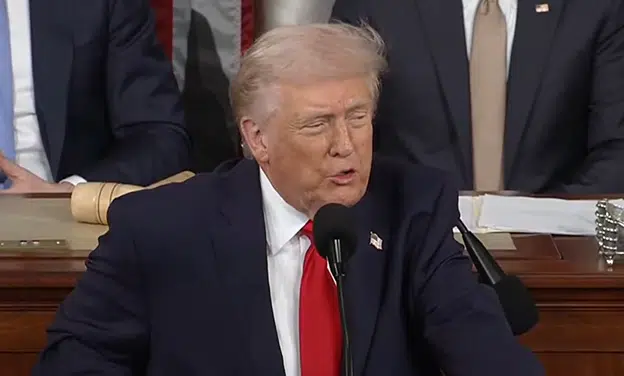
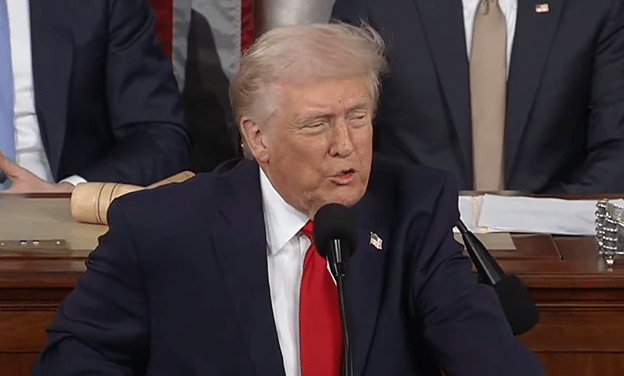
President Trump took time to touch on healthcare policy at his Feb. 24 State of the Union speech, driving home the point that his administration is taking healthcare seriously. In his speech, he urged Congress to implement the Great American Healthcare Plan, which he unveiled in January, and took aim at insurance companies for lining their own pockets while Americans pay higher prices.
President Trump’s multi-pronged Great American Healthcare Plan is only a proposal for conservatives to draw from at this time, but it is a solid blueprint and addresses many grievances consumers have with the healthcare system.
It blends consumer-first ideas like price transparency with emphasis on competition within the free market, and it arms conservatives with alternatives to Democrats’ failed track record under the Affordable Care Act, also known as “Obamacare”.
The proposal is heavy on health insurance company accountability and would force insurance companies to publish rate and coverage comparisons upfront on their websites in plain English, something that for some unknown reason has not yet been put into law.
The plan also forces healthcare companies and insurers who accept Medicare or Medicaid to post their pricing and fees in their places of business, and calls on securing into law the Trump Administration’s Most-Favored-Nation deals to give Americans the same prices for prescription drugs that people in the rest of the developed world pay, instead of the premiums we are used to paying.
President Trump has already been able to achieve aspects of his proposal, including the launch of TrumpRX, which allows Americans to secure large discounts on popular high-priced medicines and pay prices similar to what other developed nations pay.
Other parts of his proposal, like peeling back Obamacare credits and routing those funds directly to consumers to shop for private health insurance, are in limbo. Obamacare subsidies expired at the end of 2025, but the House voted to extend these subsidies an additional three years in January. The Senate is still negotiating and has not approved a final bill, but Democrats are continually resistant to efforts to replace Obamacare subsidies with direct payments to consumers.
For that reason, aspects of the Great Healthcare Plan will likely face an uphill battle, and whichever party ends up in control after November will shape healthcare policy going forward. That said, President Trump’s proposal is a solid, consumer-first model that arms conservatives with ammunition in the midterm debates, where they will be up against Democrats claiming the GOP is inactive on healthcare. This is far from the case. President Trump has dedicated significant investment to healthcare policy.
In addition to President Trump’s Great Healthcare Plan, President Trump’s Make America Healthy Movement (MAHA) is making headway and is growing in popularity according to recent polls. The MAHA movement seeks to attack the root cause of illness by removing toxic food substances, banning synthetic food dyes, increasing transparency around vaccine safety, removing untested chemicals from food products, and expanding nutrition education in schools.
A Cygnal survey from Feb. 26 found 77 percent of voters support the core tenets of the MAHA movement, up from 74 percent in October.
There is broad bipartisan support for alternative nutrition reform, with 88 percent of Republicans, 78 percent of independents and 65 percent of Democrats saying they support the core policies of the MAHA movement.
Attacking the root causes of illness, addressing accountability and transparency in health insurance coverage, lowering prescription drug costs for Americans, and working to replace Obamacare with a direct-to-consumer health insurance model that allows low-income Americans to purchase health insurance through the free market are reasonable alternatives to the standard, and failing, healthcare model. Some of these solutions, particularly the dismantling of Obamacare, will face an uphill political battle, but President Trump’s leadership on healthcare is extremely well timed and arms conservatives with solid ammunition going into the midterm cycle.
Manzanita Miller is the senior political analyst at Americans for Limited Government Foundation.