
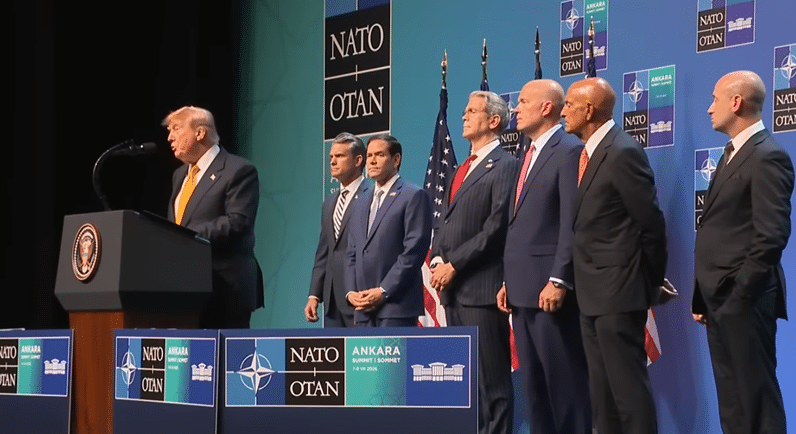
You would barely know it from the mainstream media coverage of the 2026 NATO Summit, but President Donald Trump secured a $3 billion dollar investment from Allies that will create a surge of U.S. defense jobs.
At the 2026 NATO Summit in Ankara, Turkey, last week, President Trump announced a $3 billion investment from European allies that will directly feed into the U.S. defense economy, stating that as European countries restock their military arsenals, the U.S. economy will benefit.
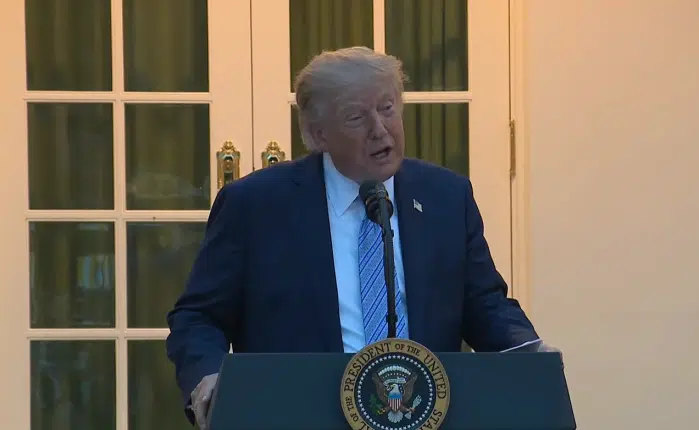
“As European nations rebuild their militaries, American equipment will be the largest beneficiary. The defense companies are going to be making most of that equipment. They want the American equipment because it works better,” President Trump said at the Summit.
President Trump added, “Just today at the Summit we announced $3 billion of new defense investments with U.S. companies, and Lockheed Martin will establish a world-class Patriot missile sustainment facility — a big deal in Europe. They were given a tremendous incentive by Europe to do that.”
Despite navigating politically rocky terrain, with the continued conflict with Iran looming over the event, President Trump was able to negotiate on the behalf of Americans with NATO allies. The President is building on his 2025 strategy to push for NATO countries to increase their investment in their own defense.
In 2025, President Trump engineered a historic agreement forcing NATO members to commit to investing five percent of their GDP into NATO through 2035. According to the White House, investment from allied countries rose over 20 percent in 2025, with allies spending an extra $120 billion in 2025 alone after the five percent of national GDP investment began.
President Trump also structured U.S. involvement in Ukraine to shift the cost for defending Ukraine off the shoulders of U.S. taxpayers and back onto European countries. The President structured the President’s Prioritized Ukraine Requirements List (PURL) system, allowing European allies to purchase U.S. military equipment to be used in Ukraine.
President Trump’s outlook on the U.S. forcing other nations to pay more into their own defense through NATO is not something new. Nearly four decades ago in 1987, then-businessman Trump made the case in multiple newspaper advertisements that the U.S. was shouldering too much of the burden for NATO.
The President’s assertion that NATO allies need to take more responsibility for their own defense is one that a majority of the American people share. A 2024 survey from the Chicago Council on Global Affairs found that while a majority of Americans believe NATO is important to U.S. security, 62 percent of Americans support using “persuasion and diplomacy” to encourage NATO allies to take more responsibility for their own defense.
More recent surveys show growing skepticism of NATO, particularly among conservatives. A June 30, 2026, survey from the Chicago Council on Global Affairs finds that less than half of Americans (47 percent) are very or somewhat confident that if the U.S. were attacked, NATO allies would come to our defense. This is a startling drop from the way voters answered just last year, when 62 percent of Americans said they were confident other nations would come to the aid of the United States.
A July 9 Reagan Institute Summer Survey found that while just over half (55 percent) of Americans do not believe the United States should withdraw from NATO, 63 percent of MAGA Republicans believe the U.S. should.
Despite facing European leaders at the NATO Summit who largely refused to step in and aid the United States in the Iran conflict earlier in 2026, President Trump managed to negotiate a $3 billion investment directly into the U.S. defense economy from European allies. The Trump Administration’s approach to foreign policy, which includes negotiation and diplomacy to generate partnerships that put American citizens first, is broadly popular when detached from a political lens. Voters want to see fairness on the global stage when it comes to defense, and an overwhelming majority support using negotiation to force NATO members to take more responsibility for their own defense.
Manzanita Miller is the senior political analyst at Americans for Limited Government Foundation.