
While the latest generic congressional ballot average shows Democrats ahead by 8.3 points, individual surveys show a closer ballot. A comprehensive Harvard CAPS-Harris poll taken Sept. 26 to Sept. 28 sheds light onto what generic congressional ballot surveys are missing. There is a strong disconnect between voters’ economic dissatisfaction and their beliefs that Democratic solutions will fix the economy. In addition, there are two key issues voters largely agree with Republicans on: immigration and voter ID laws.
When voters are asked generic congressional ballot questions, the results vary, with a Wall Street Journal poll from Sept. 16–21 showing Democrats ahead by eight points, while the Harvard CAPS-Harris poll that delves deep into voters’ views on economic policy, taxes, government spending, immigration, and party trust shows a much closer spread, with Democrats only ahead 51 percent to 49 percent among likely voters.
The Harvard poll is particularly interesting because it is a more comprehensive poll than many others — meaning, voters were asked who they planned to support in November in the context of multiple questions on issues like economic sentiment, illegal immigration, voter ID laws and who should handle the economy.
Those issues appear to be key. Every survey for the past year has shown that inflation and the economy are the two largest issues impacting voters this November, and the Harvard poll is no exception. Price increases and affordability (35 percent) and the economy and jobs (27 percent) are by far the largest issues to voters. However, 20 percent cite immigration as a top concern too.
While voters cite President Donald Trump’s tariffs as the top cause of inflation, with 33 percent of voters saying Trump tariffs are the primary cause of inflation, 24 percent cite government spending as the cause. What is more, despite some blaming Trump tariffs for inflation, voters show very little desire to implement broad tax-and-spend Democratic policies to resolve economic issues.
Voters don’t appear to believe socialism is the answer to inflation. In fact, in the current high-inflation environment, voters are united in wanting to see taxes and government spending decreased.
Voters broadly say President Trump is more responsible for the current state of the economy than the Biden Administration, with voters saying 60 percent to 40 percent that the economy is mostly due to the Trump administration.
There’s reason to pause here. Think about it: 40 percent of voters maintain that policies enacted under former President Joe Biden have caused ripple effects that the nation is still dealing with.
A sizable share of independents (38 percent) maintain that the issues we are facing today are more due to ripple effects from the Biden administration than issues that President Trump caused. A quarter of Democrats (24 percent) agree, and 57 percent of Republicans agree.
In addition, voters say by six points — 53 percent to 47 percent — that the economy today is still better than it was under Joe Biden. A large share of independents (39 percent) and even Democrats (31 percent) say the economy is better today.
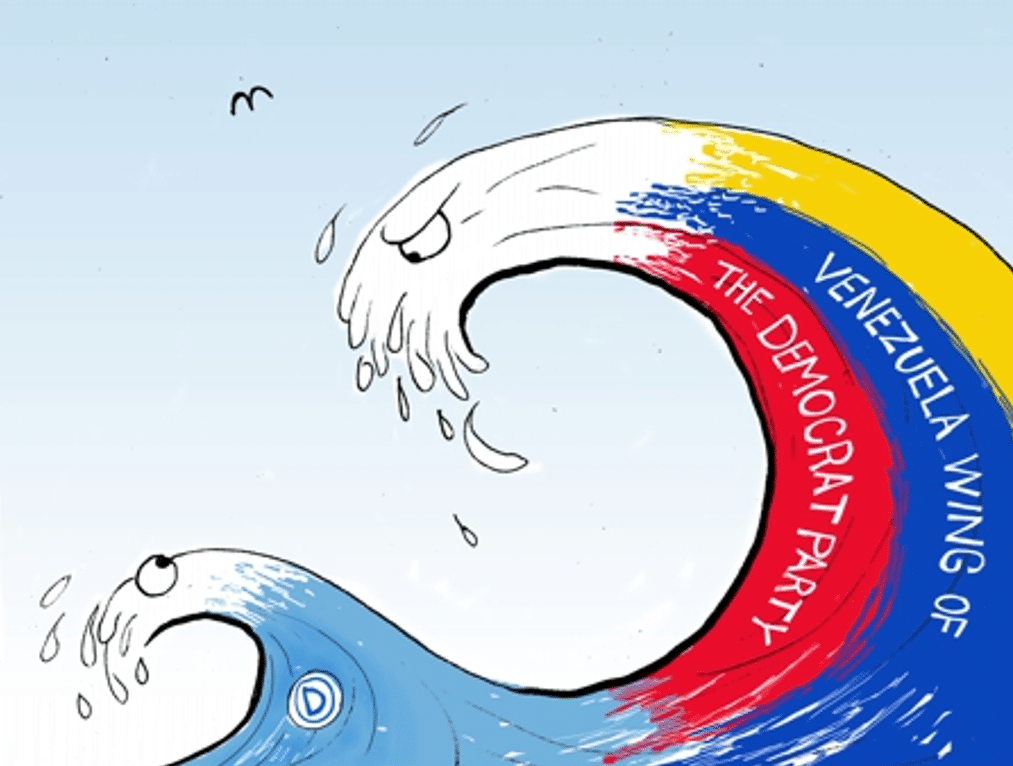
What is more, the survey tests which concrete policy solutions voters would like to see enacted to address affordability and stabilize the economy. The results demonstrate that voters lean heavily toward conservative fiscal solutions, not the Democrat tax and spend, open borders and welfare for all themes.
A vast 64 percent of voters say they favor decreasing government spending in the current environment, including 63 percent of Republicans and 64 percent of Democrats. This appears to be a massive pain point for independents — a full 66 percent of independents say they favor decreasing government spending.
On taxes, voters are united once again behind a fiscally conservative solution, not the quasi-socialism that several progressive Democratic candidates are selling as an antidote to fiscal woes.
The largest share of voters, 58 percent, want to see taxes decrease. Decreasing taxes is the most favored position across all three groups, with independents once more holding that position at the highest level, with 59 percent of independents calling for tax cuts.
On top of deep reservations about increasing taxes and government spending in the current, key Democratic pillars, Republicans have two other genuine strengths. Immigration policy, including the deportation of criminal illegals and the weeding out of illegal aliens from access to public benefits, draws strong support. Passing voter ID laws, or a proxy for ensuring only citizens who are legally eligible to vote do so, also draw strong support.
The Trump administration’s citizens-first approach to immigration is a significant buffer for Republicans this November.
The survey reveals broad support for efforts to make immigration work for American citizens, not illegal aliens, including among swing voters.
Deporting illegal aliens who have committed crimes — the pillar of President Trump’s second term — receives broad support, with a full 77 percent of voters supporting deportation of criminals. 86 percent of Republicans, 74 percent of independents, and 69 percent of Democrats agree on deportation of criminals.
Aside from deportation, a slim majority favor other immigration crackdowns, including allowing federal immigration authorities access to information on immigrants such as Medicaid and SNAP use, as well as tax statements filed by immigrants.
Just over half of voters (51 percent) support empowering federal immigration authorities to access information on immigrants that may be receiving Medicaid and SNAP, while 49 percent oppose this. Two-thirds of Republicans (73 percent) want this information to be available to the Department of Homeland Security and ICE, as do 43 percent of independents and over a third (34 percent) of Democrats.
Half of the country (50 percent) also supports giving immigration officers the power to deny green cards to non-citizens using public benefits, but half oppose it. 72 percent of Republicans, almost half (49 percent) of independents, and a surprising 29 percent of Democrats want to empower immigration officers to deny green cards to those using public benefits.
Then there is voter ID. The past eight years, President Donald Trump made it clear that voter ID laws and safe elections matter by highlighting the vast number of illegal immigrants in the country and the fact that laws currently fail to make illegal voting impossible.
While voter ID laws are not the top issue to voters (inflation, the economy, healthcare, and immigration are), when voters are asked if they support common-sense solutions such as requiring proof of citizenship to vote in federal elections, the answer is a resounding “yes.” Requiring proof of citizenship to vote is supported by 70 percent of voters, with 86 percent of Republicans, 65 percent of independents, and 58 percent of Democrats supporting the measure.
Tying it all together, the picture is complicated at first because several competing narratives are true at once. Yes, large swaths of voters, including sizable shares of Republicans and independents, blame the current administration for inflation and the state of the economy, but that does not translate into wanting Democratics in charge, hiking up taxes and spending federal dollars wildly.
If voters are giving President Trump a progress report card with a “C” on the economy, they are not saying that they think Democrats would bring that average up. Voters say by six points — 53 percent to 47 percent — that the economy today is still better than it was under Joe Biden.
Second, the Trump administration has created true structural buffers on issues voters have been yelling at Congress to fix for years: illegal immigration, including the abuse of government benefits by non-citizens, and voter ID laws. Those two issues draw broad support, and despite other flaws voters may find with the GOP and Trump, Republicans are the only party willing to acknowledge these issues and fight to fix them.
This does not mean Democrats will lose the midterm election. Historical data shows that when an incumbent president’s approval rating drops below 50 percent, their party loses an average of 38 House seats. This happened in 2018 under President Trump’s first term.
That said, the modern Democratic Party, the one that embraced BLM-riots that left cities ablaze in 2020, drove crippling lockdowns and disastrous Covid policies, fought for open borders policies that led to border chaos under Joe Biden and embrace radical left positions on transgender issues and parents’ issues is very different than the Democratic Party of 2018 or before.
Voters are upset with government in general about the economy, and Republicans are in control in the White House and Congress, so naturally that frustration is aimed at the GOP. A plurality of voters also say Trump tariffs are to blame, but a sizable minority argue that government spending is to blame. However, that economic frustration does not translate into trust in Democratic solutions to fix it.
It’s not that voter ID laws or even immigration come near to the economy in terms of priority. It could be that the issue that voters want to vote on (the economy) is an issue they don’t trust Democrats to handle no matter how angry they are at Republicans. On immigration, this is an area where Republicans have chalked up “a win.” Democrats have no wins.
Voters strongly favor reducing taxes and government spending to remove burdens on the taxpayer on top of the burden of inflation. That said, Democrats are still likely to make up ground in the midterms in the House and Senate; the question is how much. And looking further down the road, a party that voters see as inferior compared to the GOP on handling the economy, radical on social issues and willing to let the country get run over by illegal aliens and criminals draining public benefits is going to have some issues recruiting.
Manzanita Miller is the senior political analyst at Americans for Limited Government Foundation.