
Ukraine has reportedly agreed to abandon its ambitions to join the North Atlantic Treaty Organization (NATO) as the U.S. pushes both Russia and Ukraine to negotiate a ceasefire and peaceful settlement to the war that began in 2014 and expanded in 2022. Instead, Ukraine might join the European Union (EU).
Along with it, Ukraine would appear to have also abandoned obtaining the nuclear deterrent that NATO membership implies, that under Article 5 of the treaty, an attack on one is an attack on all, to protect itself from Russia. Or has it?
One of the current sticking points reportedly is an Article 5-like security guarantee for Ukraine, which the U.S. is offering on a limited basis, to deter further Russian aggression into Ukrainian territory.
The question of Article 5 centers on nuclear deterrence. Generally, a country that falls under either the U.S. or Russia’s nuclear umbrella is “safe”. That is why Ukraine has wanted to get into NATO, beginning the accession process in 2008.
But a nuclear war cannot be won and so must never be fought, so the wisdom goes. If there is any “law” that has ensured humanity’s survival every minute of the day since the dawn of the nuclear era, it is that one dictum that arose from the sobering reality of mutually assured destruction.
What prevented the Soviet Union in the past from invading Western Europe was mutually assured destruction, that if they did so, it would mean war and a likely end to human civilization. But that also prevented the U.S. from liberating Eastern Europe and the Warsaw Pact nations.
At the height of the Cold War, there were over 60,000 nuclear weapons globally, the number of which has been reduced to about 12,300 via détente, nuclear non-proliferation, arms limitation and ultimately arms reduction treaties between the U.S. and the USSR.
Even now, though, after the Cold War, there is still more than enough firepower in the weapons that are still armed to destroy almost all of humanity. To put the dilemma into perspective, there are 57.5 million square miles of land in the entire world, on which, humans occupy about 6 million square miles.
If every one of these weapons were used in the event of war because of mutually assured destruction — that is, once the shooting starts, it doesn’t stop — the fatalities from the initial blasts might be 1 billion humans simply vanishing into atoms within an hour or so. A few billion more would die in the nuclear winter that followed.
That is what a nuclear war is: An unsurvivable, unwinnable civilization killer. It would be like humanity hitting itself with a large asteroid on purpose. And that’s what every country that builds nuclear weapons risks and must contemplate. You don’t just destroy your enemy, but you destroy yourself. Merely by building them, you become a target in the event the worst happens.
And which is why, on the surface, there being no Ukraine in NATO — as has always been the case since the end of the Cold War and the dissolution of the Soviet Union — makes a degree of sense.
Under Article 5, an attack on one is an attack on all, and so Ukraine acceding into NATO particularly when it is currently in the midst of a hot war with Russia would automatically invoke the treaty. NATO would immediately be at war with Russia. Instead of deterring war, it has a high likelihood of starting one, or at least higher likelihood of starting one if the treaty is to be followed by the letter.
The result would appear to be just as dangerous to Russia as it would be to Europe and the U.S. since presumably the only way to survive the war is to actually never fight it. And, yes, those are all of the risks that were taken when Ukrainian President Viktor Yanukovych was overthrown in 2014, sparking the civil war there, when Russia annexed Crimea in 2014 in response and when Russia invaded the eastern regions of Ukraine in 2022.
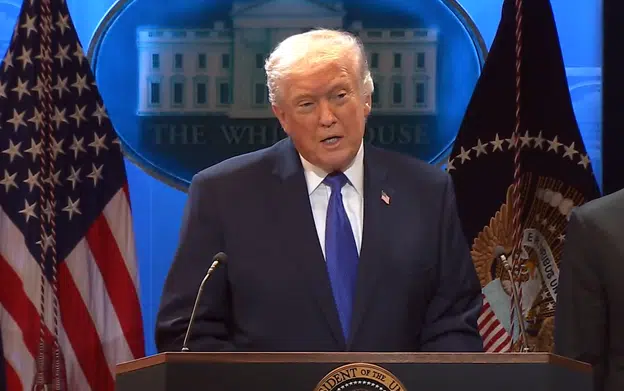
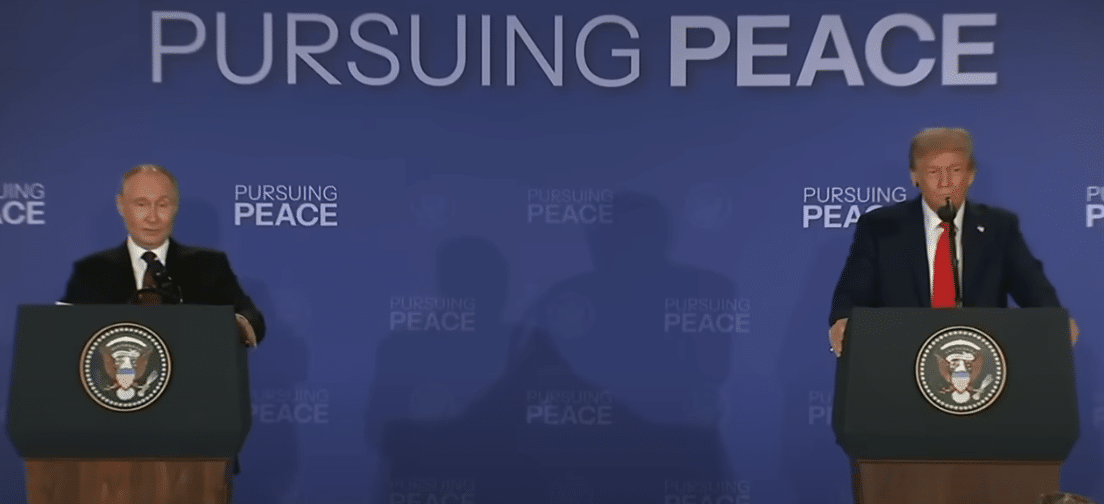
All of these events have made a wider war far more likely than pre-2014 — which is why President Donald Trump has been pushing both Russia and Ukraine to end the war on terms that both sides can live with. It’s not just for their survival, to stop the killing, as the President says but also everybody’s survival. For humanity itself.
To put it another way, Ukrainian membership in NATO does not appear to be in Ukraine’s interests, Russia’s interests or NATO’s interests. If that’s what’s being agreed to, then there appears to have been significant progress in the Trump-initiated peace talks. But they’re not out of the woods yet.
What does an Article 5-“like” security guarantee even look like? That is for the three parties of the talks, the U.S., Russia and Ukraine to work out. If the problem for both the U.S. and Russia with Ukrainian NATO membership is the potential for the nuclear trigger, it is hard to see why would a non-NATO but still nuclear trigger be a suitable alternative that both sides would agree to. So, it must be something else.
But NATO membership is not the only potential trigger to a wider . Russia continuing its war poses all of the same risks. Looking into the future, President Trump is in his final term of office. The next administration might be from a different party, might have a different view about how to settle the conflict and so uncertainty enters the equation the longer the war goes on. Uncertainty over whether Russia can continue waging the conflict, whether Ukraine can continue to sustain the conflict on its end and keep its territory and so forth. Today, the U.S. is willing to help settle the war. Tomorrow?
And then there’s Europe itself, which as the regional partner for Ukraine, might have some of the best leverage to push Ukraine to take a deal now while there’s still a deal to be had. Europe should have been begging us to help end the war, but they haven’t. Just as the Europeans can be helpful, they can also be able to push Ukraine to reject a settlement of some kind, and that would be a tragedy that we all may end up regretting.
The truth is, President Trump is not getting any younger. And the deal that is on the table now might be the last, best deal either side can hope for. That goes for Russia and Ukraine — and everyone else. Whatever is on the table right now, that could be as good as it gets. If nothing else, living to fight another day might have to be good enough for now, with the hope that both sides eventually appreciate the longer term benefits of peace. Or, they could just keep fighting — and we’ll eventually find out how it ends.
But there might not be another peace president. This could be it.
Robert Romano is the Executive Director of Americans for Limited Government Foundation.