

“[A] merger that results in greater choice in video libraries at lower prices is welcome while delivering to consumers a solution to their current frustration with the fractionalized streaming content.”
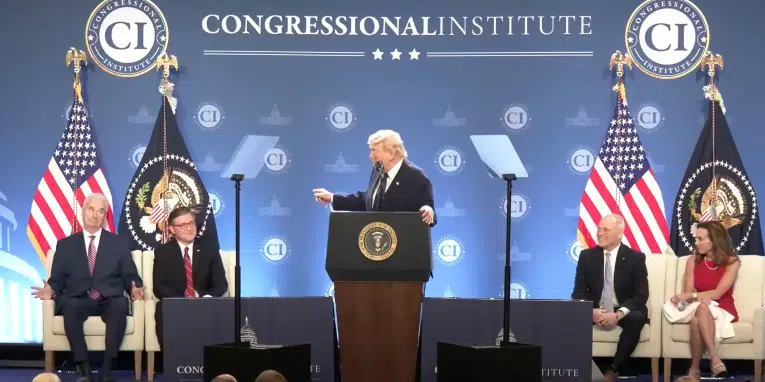
That was U.S. Rep. Scott Fitzgerald (R-Wis.), Chairman of the House Judiciary Subcommittee on the Administrative State, Regulatory Reform and Antitrust at a hearing on Jan. 7 expressing support for the recently announced merger of Netflix and Warner Brothers Discovery. Paramount is also attempting to wage a hostile bid for the company.
Fitzgerald rightly noted that the decision about any merger should be up to the companies’ shareholders: “let me be clear, this hearing is not about picking winners or losers in the merger context. This is for Warner Brothers’ shareholders.” Here, Fitzgerald was appearing to defer to Netflix, who Warner has chosen for the merger over Paramount’s bid.
Those thoughts were echoed by Elevecon founder Jay Ezrielev, who stated, “In reviewing the potential Netflix and Paramount deals, antitrust enforcement should focus on the core antitrust goal of preventing harm to competition. The enforcers should not be picking which of the two deals [Netflix or Paramount] should go through based on what they think will deliver the best outcome for consumers. This choice is for Warner Brothers Discovery shareholders.”
On that count, whether to go with Paramount, the vote by Warner was unanimous against. “Following a careful evaluation of Paramount’s recently launched tender offer, the Board concluded that the offer’s value is inadequate, with significant risks and costs imposed on our shareholders,” said Samuel A. Di Piazza, Jr., Chair of the Warner Bros. Discovery Board of Directors in December. “This offer once again fails to address key concerns that we have consistently communicated to Paramount throughout our extensive engagement and review of their six previous proposals. We are confident that our merger with Netflix represents superior, more certain value for our shareholders and we look forward to delivering on the compelling benefits of our combination.”
At the Jan. 7 hearing, Ezrielev also warned that the Trump administration should not try to extract concessions from merger, “The enforcers should also not use their leverage to extract a settlement that advances a policy agenda. The focus should be strictly on preventing harm to competition. I don’t know if there’s a compelling antitrust case against either of the deals… However, I would be highly skeptical of an enforcement case based entirely on a structural presumption or a presumption of a substantial lessening of competition based on an increase in market concentration in the relevant market. Such an increase in market concentration should be a starting point for determining whether to move further in the investigation. An increase in market concentration by is not by itself a reliable indicator of harm to competition.”
Overall, Fitzgerald appeared satisfied the merger would result in lower costs for consumer, stating, “Economic theory teaches us that mergers create efficiencies, and that’s no different when it comes to the streaming industry. By vertically integrating content production and distribution, platforms can eliminate and also work on lowering redundancies and focus on delivering high quality content to consumers at lower prices.
That’s all exactly right.
There is very little question that will help American consumers save money on their ever expanding monthly streaming budgets and make Warner’s library of titles more widely available than ever before.
The merger will also keep the Warner and Discovery studios (the latter of which is being spun off to Discovery Global) owned independently of Disney, Paramount and Universal, ensuring all four remain competitive. That’s a win for consumers and dramatically reduces antitrust concerns. It also protects Warner and Discovery workers who still work at their respective studios.
And the marketplace for streaming options will remain competitive as Netflix will still be competing with Amazon, Disney, Paramount, Apple and YouTube. That’s all great news.
Finally, and most importantly, the deal puts America first by keeping iconic and historic American cinema — spanning generations of beloved films and franchises — under American ownership. That will keep Batman, Superman and other beloved Warner characters right where the belong in the U.S.
On all counts, protecting consumers, saving money, more options, overcoming antitrust objects and serving American interests, the American people win.
Robert Romano is the Executive Director of Americans for Limited Government.