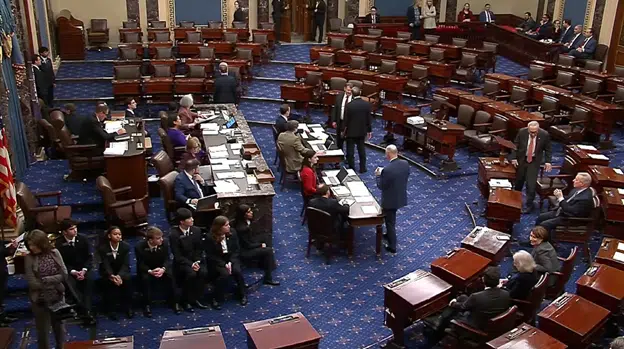

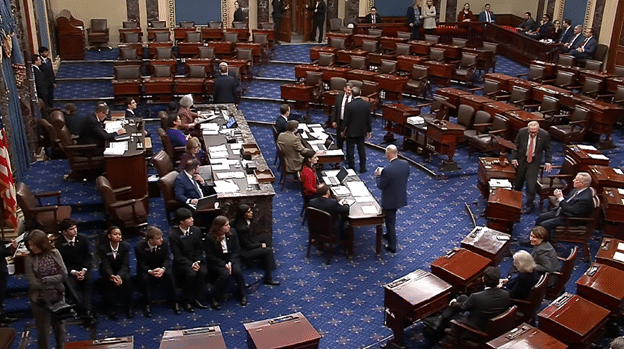
Senate Democrats’ War Powers Act resolution against the U.S. war in Iran has failed, with just 47 senators in favor and 53 opposed in what was largely a party line vote, with Democrats voting to end the war and Republicans voting to give President Donald Trump the space he needs to finish the job.
It’s just as well. If the resolution had somehow become law — which read in part “Congress hereby directs the President to remove the United States Armed Forces from hostilities within or against Iran…” — it would have banned the U.S. from defending itself against Iran’s continued attacks on U.S. forces and allies in the Middle East.
Instead, by defeating the resolution, the Senate has granted the President a degree of latitude — within the confines of the Constitution and the law — to proceed with the military action. A similar resolution in June 2025 failed after the U.S. and Israel bombed and destroyed Iran’s nuclear weapons facilities.
For example, Sen. Susan Collins (R-Maine), who voted against the resolution, explained her vote on X on March 4 stating, “Passing this resolution now would send the wrong message to Iran and to our troops. At this juncture, providing unequivocal support to our service members is critically important, as is ongoing consultation by the Administration with Congress.”
Collins also highlighted the continued threat that Iran poses, stating, “We cannot tolerate a nuclear-armed Iran. The Iranian regime’s pursuit of nuclear capabilities, ballistic missile development, and support for terrorist proxies pose serious and longstanding threats to the national security of the United States and our allies. Iran has enormous stockpiles of missiles and one-way attack drones and the industrial capacity to continue to expand its arsenal. If the Iranian regime were allowed to continue developing ballistic missiles, it would soon be able to shield its nuclear facilities by threatening a grave and immediate response to any attack.”
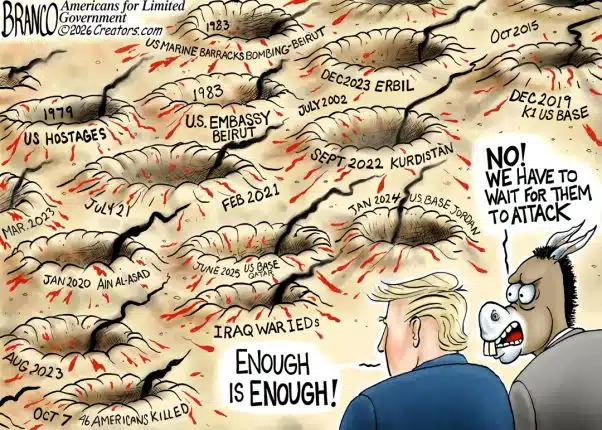
And Iran is the world’s leading sponsor of terrorism, Collins noted, stating, “Iran is also the world’s leading sponsor of terrorism. It has spent nearly half a century attacking Americans directly and through terrorist proxies, beginning with the 1979 seizure of the U.S. Embassy in Tehran that resulted in 66 Americans being held hostage for 444 days and continuing with the numerous devastating attacks against American service members and civilians in Lebanon, Saudi Arabia, Iraq, and more. In the October 7, 2023, massacre, Iranian-backed Hamas terrorists killed 1,200 people, including 46 Americans, in what was the deadliest single day for the Jewish community since the Holocaust. The list of the Iranian regime’s crimes against America and our allies goes on and on.”
In fact, more than 1,000 Americans have been killed by Iranian terror attacks over the years, according to a summary of the dead compiled the Foundation for the Defense of Democracies, including repeated attacks in Iraq and Lebanon.
But, it’s not a blank check, said Collins, who noted the limit to how far the President could go in her eyes to prosecute the war, stating the obvious, which is that in order for a longer war to be sustained, Congress would obviously have to play a role: “The Constitution gives Congress an essential role in matters of war and peace. Sustained combat operations require full engagement with Congress.”
As it is now, though, in Collins’ eyes, the President was complying the War Powers Act: “The Administration has adhered to the provisions of the War Powers Act that require notification to Congress within 48 hours of hostilities commencing, and it has provided numerous classified briefings to Congress.”
Now, the resolution was largely symbolic insofar as even if it had somehow passed both the House and the Senate, the President would have just vetoed it. But it still played an important and appropriate role in giving Congress an opportunity to consider the President’s launching the war into Iran.
Nobody knows how long it will take for U.S. forces and our allies to achieve victory, so Collins is correct to note that should it become necessary to go beyond the time thresholds set forth in the War Powers Act — which allows the President 60 days for combat operations, which can be extended another 30 days for a total of 90 days — that Congress will almost certainly need to get involved, especially to fund the military.
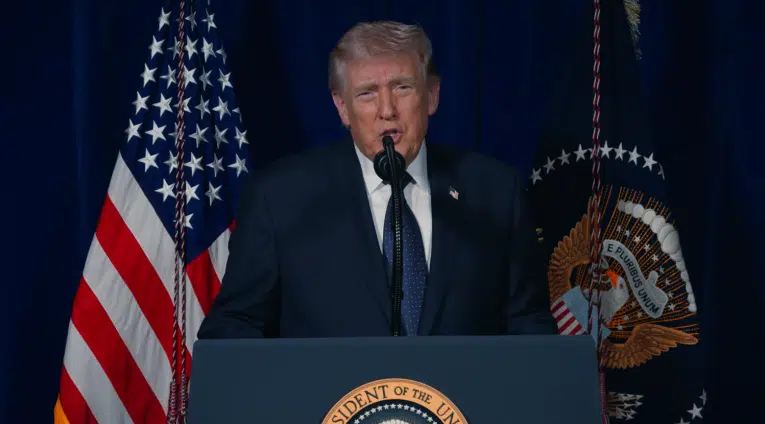
And if this is going to come up again in Congress, that’s what it should be: A vote to give the U.S. military everything it needs to win. We don’t want this particular enemy getting up off the mat after what the U.S. and its allies have done. Iran will surely seek retribution. Instead, the President should finish the job.
Robert Romano is the Executive Director of Americans for Limited Government.