
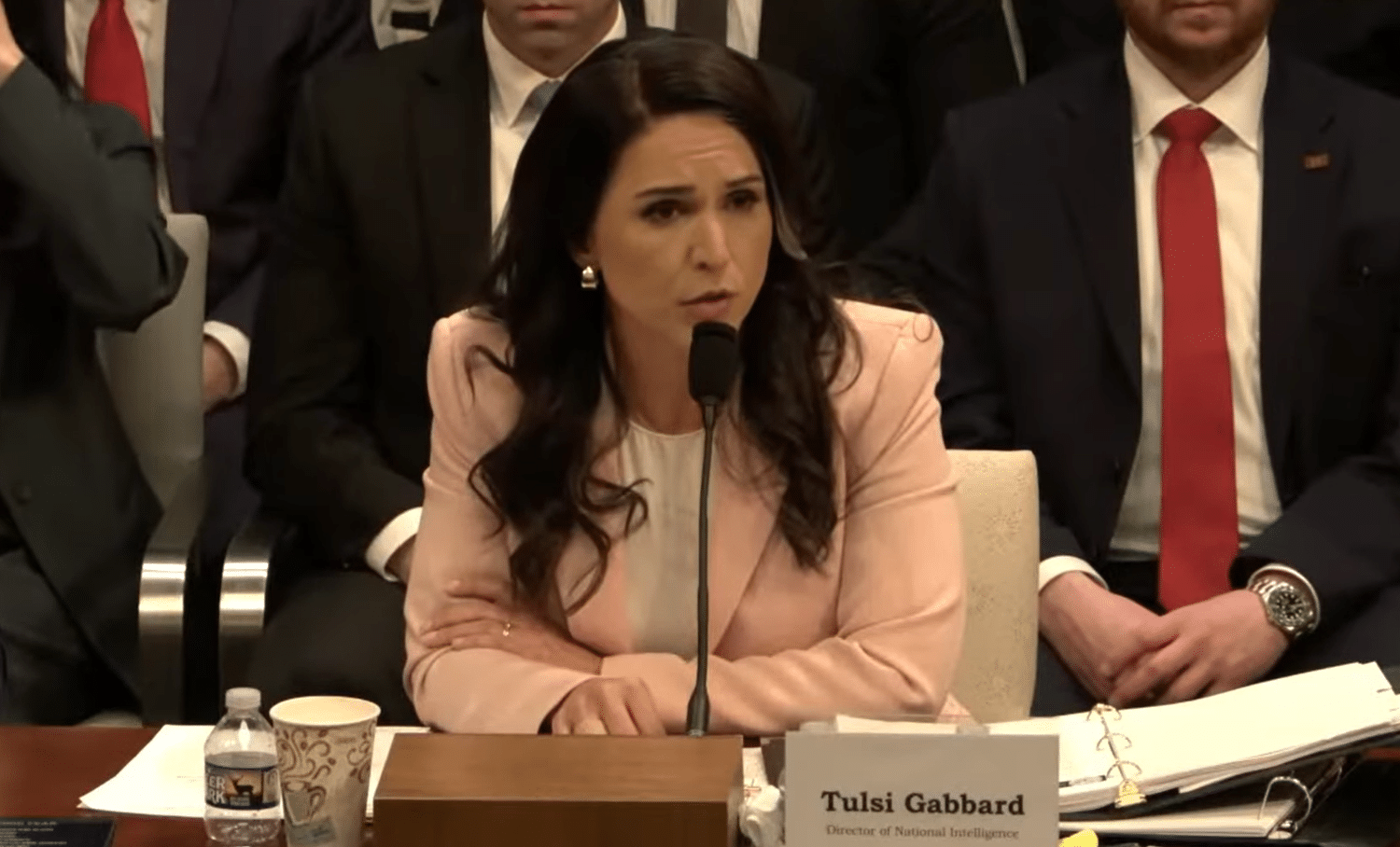
“The [Intelligence Community] IC has high confidence that we know where it is… We can speak more about this topic in the classified setting.”
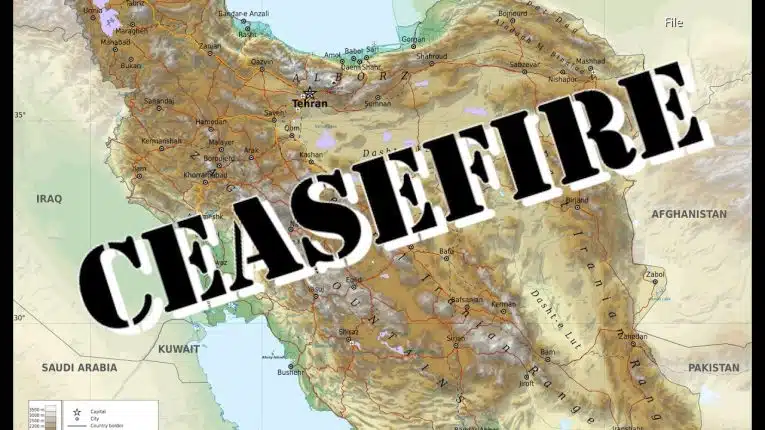
That was Director of National Intelligence Tulsi Gabbard’s answer to U.S. Rep. Steve Cohen (D-Tenn.) in a March 19 House Permanent Select Committee on Intelligence hearing about whatever became of Iran’s highly enriched uranium following June 2025’s air strikes by the U.S. against Iran’s uranium enrichment facilities.
When asked if the U.S. had the capability of destroying the nuclear materials, Gabbard would not say a thing in the open hearing: “This is a conversation for a closed setting, sir.”
Sometimes the biggest questions to come out of Congressional hearings are the ones that were not asked very openly. But it’s the biggest story in the world right now.
Heading into the hearing, the biggest question was what had happened to the nuclear materials. Were they destroyed in Midnight Hammer or not?
In March 2025, the Director of National intelligence had reported, “Iran’s enriched uranium stockpile is at its highest levels and is unprecedented for a state without nuclear weapons.”
In May 2025, the International Atomic Energy Agency (IAEA) agreed, writing: “As of 17 May 2025, the Agency has estimated that the total enriched uranium stockpile in the form of UF6 of 8413.3 kg comprised: 2221.4 kg of uranium enriched up to 2% U-235 (–705.6 kg since the previous quarterly report); 5508.8 kg of uranium enriched up to 5% U-235 (+1853.4 kg); 274.5 kg of uranium enriched up to 20% U-235 (–332.3 kg); and 408.6 kg of uranium enriched up to 60% U-235 (+133.8 kg).”
And then when U.S. Special Envoy Steve Witkoff negotiated with the Iranians, they said they still had it, telling Fox News’ Sean Hannity on March 2, “Both the Iranian negotiators said to us, directly, with, you know, no shame, that they controlled 460 kilograms of 60 percent, and they’re aware that that could make 11 nuclear bombs, and that was the beginning of their negotiating stance.”
And on March 18, Gabbard testified to the Senate Permanent Select Committee on Intelligence that the nuclear enrichment programs had been “obliterated”: “As a result of Operation Midnight Hammer, Iran’s nuclear enrichment program was obliterated. There has been no efforts since then to try to rebuild their enrichment capability. The entrances to the underground facilities that were bombed have been buried and shuttered with cement.”
But, in verbal testimony at the same hearing, Gabbard noted to Sen. Jon Ossoff (D-Ga.) that Iran still retained the intention planned to keep going with the program: “The intelligence community assessed that Iran maintained the intention to rebuild and to continue to grow their nuclear enrichment capability.”
So, the questions in these open hearings were first about the enrichment facilities, and then whether they posed an imminent danger, and then a day later about the already enriched uranium. Those are not the same.
The President has agreed repeatedly that the enrichment facilities have been “obliterated”. That’s not where any disagreement is arising from. When members of Congress finally got around to asking the pertinent question about the uranium Iran had already enriched, the answer is that is still at large, but the U.S. says it knows where it is.
This confirms that Iranian negotiators that Witkoff had spoken to who said they had enough uranium to make 11 bombs were not bluffing.
Although many comparisons have been made, this is a decidedly different situation than the Iraq War, which was initiated in 2003 to dismantle Iraq’s remaining weapons of mass destruction programs, only to find out in 2004 via the Iraq Survey Group that it had already been “destroyed: “Iraq’s WMD capability… was essentially destroyed in 1991…”
Similarly, though, the report found that Saddam Hussein still wanted to recreate those programs as soon as international sanctions were lifted and “aspired to develop a nuclear capability… but he intended to focus on ballistic missile and tactical chemical warfare (CW) capabilities.”
So, Iraq had the weapons, had used them in the Gulf War and then 12 years later when the U.S. went to look for them because of intelligence that said Iraq still had them, we couldn’t find them because we think they were destroyed. And, whatever was left over might have been shipped to Syria but the Iraq Survey Group did not know for certain.
The whole time, Iraq gave off signals including not cooperating with the inspectors that they still had something to hide, believing it preserved the regime.
Now, in Gabbard’s testimony, we find that Iran’s enriched uranium has either been recovered or else may be buried, too — she doesn’t say where the nuclear materials are exactly — even though the enrichment facilities were destroyed. We already knew that since Iran said so.
The President was right to perceive an imminent threat from that alone; he believed the enemy at face value and at a minimum wasn’t taking chances. Now, we learn there is also further intelligence that backs up not only that Iran still has the nuclear materials, but the U.S. knows where they are.
And yet, the U.S. was confident Iraq had retained its WMD in 2003, too.
Whether Iran still has the nuclear materials I believe is a legitimate concern (sounds like they did!), so much so that clearly the President believes we need to go get them or at least ensure they too are destroyed (that was Cohen’s very good question!).
Otherwise, perhaps a decade from now, if there ever is an Iran Survey Group, perhaps the report will read “Iran’s nuclear capability… was essentially destroyed in 2025…” and we’ll always wonder if the Iranians really recovered the enriched uranium or not. Gabbard seems to be indicating they have.
But, it’s still lessons learned. One of the reasons we thought Iraq still had WMD was because after a decade Iraq was sending signals it potentially still had them even though they were largely destroyed, and so they could never be found.
The important part is President Trump perceived an imminent threat and acted on it. The intelligence community is telling the President it knows where the enriched uranium is. If that’s the assessment Gabbard is giving the President, then he is well-served that his intelligence chief is not just going to say something if she doesn’t know it’s true. In this case, she says there is “high confidence”.
Maybe the real lesson for President Trump is: Don’t wait a decade to find out if you got the nukes. Finish the job, Mr. President.
Robert Romano is the Executive Director of Americans for Limited Government Foundation.