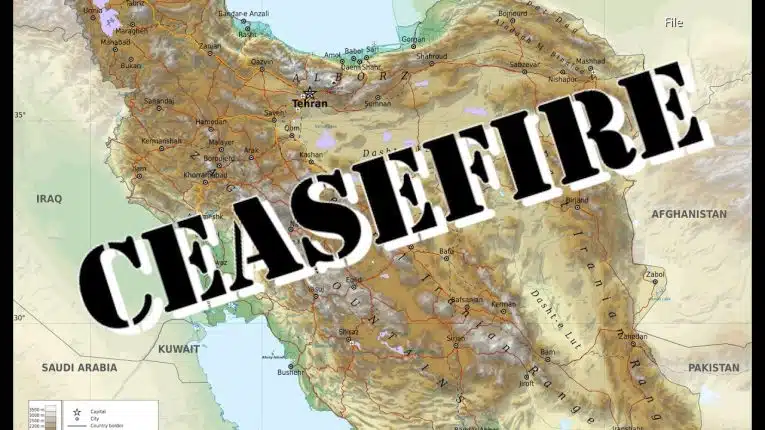

On April 7, President Donald Trump orchestrated a tentative ceasefire with Iran, promising to hold off attacks from the U.S. military in exchange for, among other agreements, Iran reopening up the Strait of Hormuz and allowing oil ships to pass safely through.
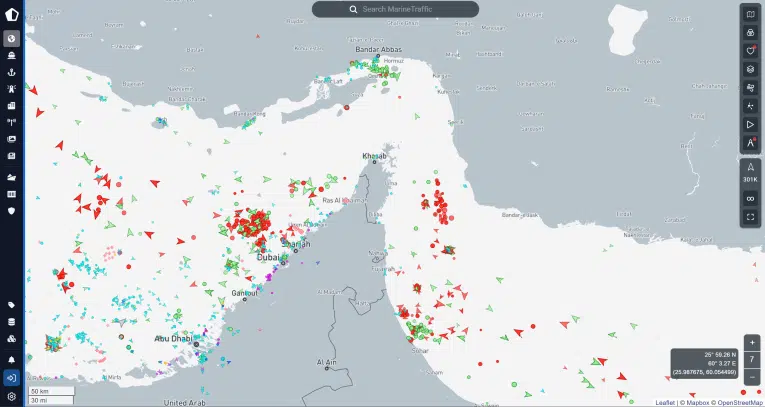
However, barely three days into the ceasefire, very few tankers are making it through the strait after Iran retaliated against Israel’s attacks on Lebanon and began restricting traffic once again.
Kpler’s Matt Smith told CNBC Thursday, “in the grand scheme of things here, the Strait of Hormuz remains closed, and we should expect it to see very little traffic going forward here, unless we have some positive developments related to Iran.”
Smith noted that as of April 9, mostly Iranian tankers were being allowed to pass through the strait.
Iran is using its leverage over the strait and by proxy over fuel prices, to bargain with the U.S. against further attacks. This comes as oil prices have skyrocketed, with U.S. crude oil shifting rapidly between $95 and nearly $103 dollars per barrel April 9 — at about $97 a barrel as of this writing — as concerns over the ceasefire shook the market.
Sure enough, in March energy prices skyrocketed 10.9 percent in March in the consumer price index published by the Bureau of Labor Statistics, including gasoline at 21.3 percent and fuel oil at 30.7 percent.
This weekend, peace talks are expected to get under way between Israel and Lebanon, with President Trump, Vice President JD Vance, and senior envoys Steve Witkoff and Jared Kushner on track to attend peace talks in Islamabad, Pakistan.
For now, the U.S. is upholding its end of the ceasefire against Iran, but President Trump made it clear in a Truth Social post Wednesday that Iran will need to comply with the complete terms of the ceasefire, including reopening the Strait of Hormuz, if the U.S. is going to continue upholding the ceasefire.
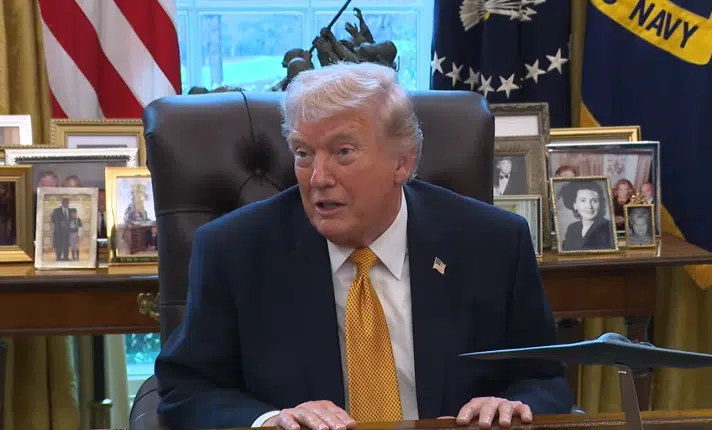
President Trump posted the following to Truth Social on Wednesday: “All U.S. Ships, Aircraft, and Military Personnel, with additional Ammunition, Weaponry, and anything else that is appropriate and necessary for the lethal prosecution and destruction of an already substantially degraded Enemy, will remain in place in, and around, Iran, until such time as the REAL AGREEMENT reached is fully complied with.”
“If for any reason it is not, which is highly unlikely, then the “Shootin’ Starts,” bigger, and better, and stronger than anyone has ever seen before. It was agreed, a long time ago, and despite all of the fake rhetoric to the contrary – NO NUCLEAR WEAPONS and, the Strait of Hormuz WILL BE OPEN & SAFE”, President Trump added.
The ceasefire and President Trump’s push for Iran to safely reopen the Strait of Hormuz could not come at a better time, as Americans are growing increasingly concerned about fuel prices as a result of the conflict with Iran.
Polling released by the Pew Research Center April 7 shows voters’ primary concern with the Iran war is fuel prices, though significant shares of voters are also concerned about troops being sent to the Middle East if the war continues.
The survey of 3,507 adults finds that 69 percent of Americans are concerned about higher gas and fuel prices due to the conflict with Iran, with 45 percent “extremely” concerned.
Democrats are more willing to admit they are concerned about higher fuel prices due to the war, with 79 percent of Democrats, 69 percent of independents, and 59 percent of Republicans stating they are concerned about rising fuel costs. This indicates that tackling fuel costs will be essential to Republicans holding onto their House seats in November.
While Americans are deeply concerned about rising fuel costs related to the war, voters are also concerned about the possibility of sending U.S. troops into conflict, with 61 percent of voters saying they are concerned about U.S. troops being deployed to the Middle East.
Despite these concerns, the conflict with Iran appears to be winding down. Secretary of War Pete Hegseth stated at a press conference Wednesday that Operation Epic Fury in Iran was a military victory with a “capital-V”.
“Operation Epic Fury was a historic and overwhelming victory on the battlefield, a capital-V military victory,” Hegseth said Wednesday. “By any measure, Epic Fury decimated Iran’s military and rendered it combat-ineffective for years to come.”
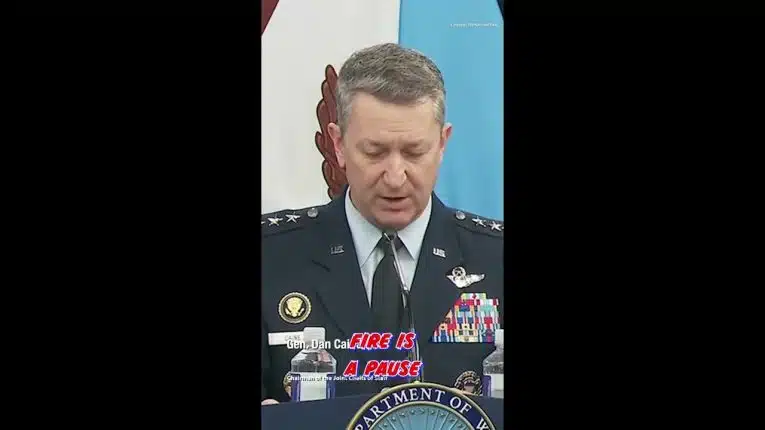
Gen. Dan Caine congratulated U.S. troops for their accomplishments at the same press conference but noted that a ceasefire is “a pause”, and not the same as a finite ending to U.S. military operations in Iran.
The ceasefire is exactly that, a cease in fire, and to maintain that will require Iran’s compliance. The ceasefire is contingent upon Iran agreeing to the peace terms laid out by the U.S., including the safe reopening of the Strait of Hormuz. Six weeks into the conflict with Iran, pushing for a closure to the conflict and a reopening of the Strait of Hormuz could not come at a better time as the American people are growing concerned about fuel prices.
Manzanita Miller is the senior political analyst at Americans for Limited Government Foundation.