
Left-wing ideologies spawned from liberal institutions have fueled failed policies like open borders, globalization, and rampant crime in “sanctuary cities” in the past decade, and Americans are beginning to question whether a four-year education is entirely necessary. Liberal institutions seem to primarily churn out young people with anti-American attitudes, degrees that are often worthless, and mountains of debt.
New polling shows American families are weighing the merits of skipping the four-year indoctrination cycle and encouraging high school graduates to enter trade fields or business ventures instead.
A new survey from Napolitan News Service indicates that the American people believe the country should focus on a renewed industrial sector and leave the liberal arts degrees behind.
The survey, conducted on 1,000 registered voters from June 22-23 found 68 percent of voters say it is important for our economic and political incentives to create more good jobs for people who don’t have college degrees. Only a third say it is important that “everyone” goes to college. This is a shift from older surveys, including a decade of Gallup data, where well over half of voters said college was very important.
Voters are beginning to question the merits of an ivory tower degree that may not prove particularly beneficial to society, with the largest share of voters (45 percent) saying society would benefit more from high school graduates entering the workforce. Meanwhile 37 percent of voters say society would benefit more from high school graduates going directly to college.
The survey indicates that while Americans see the value of completing high school (41 percent say a sixteen-year-old who has the skills to function in adult society should finish their high school education), voters increasingly believe a four-year degree is unnecessary.
Americans are also fully aware that the federal government’s push for every young person to attend college and heavy subsidization of these programs are driving up the cost of education for everyone. Voters say by a whopping 43 percentage points (60 percent to 17 percent) that the reason the cost of higher education has increased substantially is because the federal government has subsidized the cost. Only seventeen percent think higher education has become more expensive because the “quality has improved greatly”.
This shift in how Americans view the academic pipeline that is notorious for churning out young people with gender studies degrees who are a mismatch for the current labor market has significant implications for the economy, culture, and politics.
For one, it highlights a growing disconnect between the degrees universities are notorious for reeling young people into spending a housing down payment on and the needs of the labor market.
Under President Donald Trump’s reindustrialization approach, American manufacturing is experiencing a significant rise, with the Institute for Supply Management’s Purchasing Managers’ Index (PMI) indicating in May of this year U.S. manufacturing marked its highest recording of the index since May 2022.
The report shows the economy was expanding for the 20th consecutive month in a row in June. The New Orders Index, which measures demand, expanded for the sixth consecutive month according to the report. With more companies reshoring jobs to the United States, America will need young people to fill those roles.
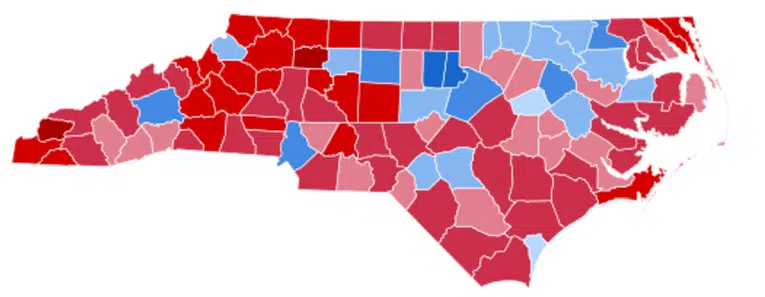
Second, this shift has large political implications. In the past decade, it has become increasingly clear that voters who skip college and enter a skilled trade lean conservative politically. This is likely in part because young people who choose to skip the institutional pressure of college are making decisions for themselves outside the lens of what modern liberal culture considers necessary, but it also points to the fact that skipping the four years of indoctrination leaves young people with their original values intact.
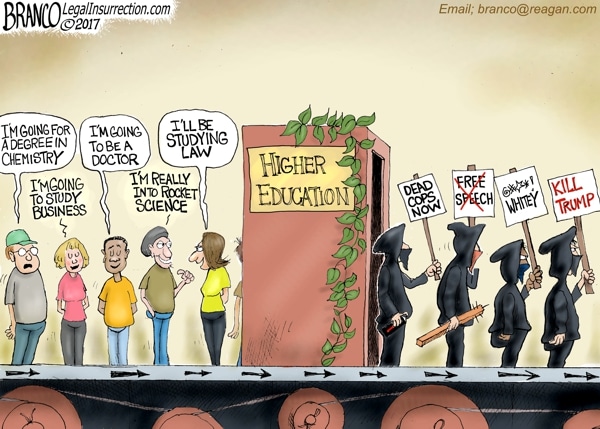
It is well documented that college campuses are hostile toward conservatives, with a vast majority of professors, particularly at elite universities, identifying as liberals, and with conservative students saying they are more likely to hide their political identity for fear of backlash.
A 2019 study of 1,000 Republican leaning students found a full 73 percent felt the need to hide their political views in the classroom because they were afraid they would be penalized academically.
That perception is not without cause, with a 2024 survey from the Foundation for Individual Rights and Expression (FIRE) indicating only 20 percent of university faculty said a conservative student would fit in well in their department. Conservative students are marginalized, and that is if they manage to escape the indoctrination cycle.
With the prevailing narrative of the past several decades that a university education was necessary being called into question, voters are recognizing that society may need working-age young adults entering skilled trades and entrepreneurship more than it needs gender studies majors.
Americans recognize that not only has the push for all young people to attend college drastically raised the price of education for everyone — including those career fields like medicine that do require secondary education — but that society could benefit from young people entering a larger selection of skilled trades. This shift could significantly alter the trajectory of the country, and with the Trump Administration’s focus on reindustrialization, the U.S. could become more self-reliant in the coming years.
Manzanita Miller is the senior political analyst at Americans for Limited Government Foundation.