
The nation is still digesting exactly why Republicans lost so resoundingly on Election Day 2026, with many wondering if the Democratic blue wave means the country took a radical lurch to the left after seemingly rejecting progressive ideologies in 2024.
Democrats did exceptionally well on election night, securing at least 258 seats in the House and 56 seats in the Senate, and the fact that voters sent a sharp economic message to conservatives cannot be ignored.
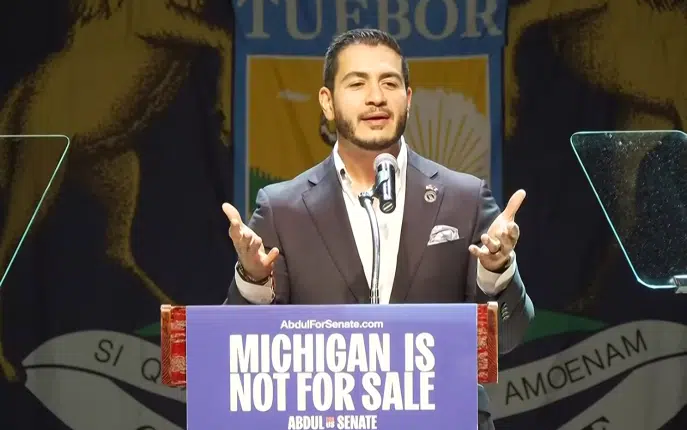
That said, data suggests that the most radical left-wing candidates Democrats nominated — including Abdul El-Sayed in Michigan and Peggy Flanagan in Minnesota — underperformed Democrats as a whole.
Democrats swept the Nov. 3 midterm election, but general election voters were less interested in the left’s progressive agenda and more intent on sending a message to Congress to end the war with Iran, and to bring down fuel prices and the cost of living.
As Nate Cohn, chief political analyst for the New York Times, pointed out this week, while the picture contains nuance, Democrats’ weakest results often came from races where the Democratic Party nominated far-left candidates.
The Times’ analysis points out that when Democrats nominated working-class candidates, like they did in congressional races in Montana, Ohio, and Pennsylvania, populist Democrats did better, while “woke” progressives in key Senate races did worse.
The Times notes that out of six U.S. Senate races where Democrats underperformed the average, five of those races contained left-wing progressives. This includes big names like El-Sayed in Michigan, Peggy Flanagan in Minnesota, and Ed Markey in Massachusetts.
Based on district demographics, prior election results, and incumbency, although they all won, El-Sayed underperformed in Michigan by 4.6 percentage points, Flanagan underperformed by 6.1 points, and Markey underperformed Democrats by 3.9 percentage points.
Exit polling from CNN supports this narrative. While polls show progressives in this year’s U.S. Senate races earned solid support across key demographics, voters in both Michigan and Minnesota only marginally believed Democrats would do better on the economy. In both races, support for socialism was weak.
In Michigan, voters said Democrats would do a better job on the economy by 5 percentage points, 44 percent to 39 percent. Only 10 percent of voters had a strongly favorable view of socialism, while 29 percent had a strongly favorable view of capitalism (and 54 percent had a positive view of capitalism overall).
In Minnesota, voters said by 6 points, 45 percent to 39 percent, that Democrats would be better for the economy than Republicans, but like Michigan, only 10 percent held a strongly positive view of socialism. Twenty-nine percent held a strongly favorable view of capitalism (while 57 percent total held a favorable view of capitalism).
Voters were not necessarily embracing a Democratic cultural agenda on Election Day; there was simply an economic tipping point with regard to the cost-of-living crisis that tipped the scales for Democrats. However, the blue wave was not a progressive wave, and that’s important.
As Cohn points out, “The progressives who systematically underperform have tended to come from a narrower faction of the party: the new, activist left. This faction is clearly to the left of the party’s mainstream progressives, most obviously when its members embrace socialism and slogans or positions like ‘defund the police.’ But they’re often different in other respects that can contribute to their electoral woes. They are ‘fighters,’ not compromisers.”
Those ideological agitators performed worse than populist Democrats who focused on economic issues. This makes sense, looking at exit polling, which clearly makes the case that voters were not signaling mass support for socialism, not signaling mass support for progressive policies, and only marginally believed Democrats would do a better job on key issues.
Then there is the fact that when Democrats pushed culturally left-wing ballot measures this election cycle, they got slapped back by voters, even in traditionally blue states.
Voters supported ballot measures in four states that pushed back against transgender athletes in girls’ school sports and gender transition for minors, including passing Initiative 638 in Washington State, which opponents are calling “the most extreme” trans sports ban of its kind.
This is only more evidence that the results of Nov. 3, 2026, were not an embrace of radical left-wing ideology or a call for socialism, even when voters elected quasi-socialist Democrats. Even in races where radical left-wing candidates were selected by Democrats in the primaries and went on to win in the general election, those radical candidates did worse than Democrats elsewhere.
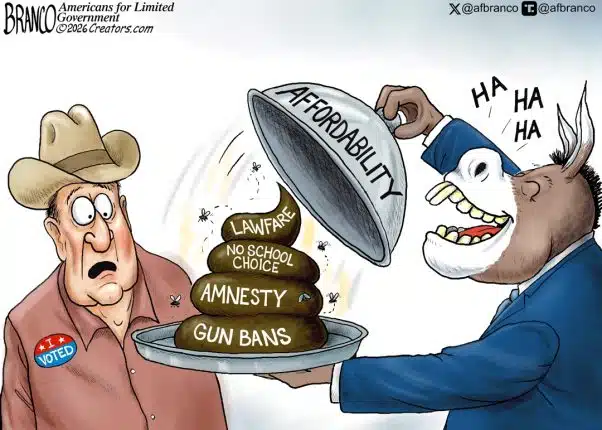
Voters sent a wake-up call to Washington, but progressives will be sorely disappointed if they mistake that wake-up call for an embrace of a radical left-wing cultural agenda the public did not sign up for. Republicans underestimated the importance of kitchen-table issues this cycle, hoping that victories on manufacturing, immigration, and crime would be enough to beat the cost-of-living woes, and that was their lesson. Leftists got lucky in that the year they nominated some of the party’s most radical candidates, voters lined up to send a message to Republicans. The mistake for Democrats would be mistaking that stroke of economic misfortune on the part of Republicans for an embrace of radical left-wing ideology.
Manzanita Miller is the senior political analyst at Americans for Limited Government Foundation.