
The April 8 U.S.-Israel-Iran ceasefire appears to still be holding as major combat operations against Iran by the U.S. have been halted for almost a month now, while the U.S. Navy blockade that began April 13 remains in effect.
Now, practically 60 days into the war — President Donald Trump directed the U.S. military to use force against Iran to degrade its nuclear and missile capabilities, to defeat its forces and to prevent them from projecting power against U.S. interests in the region, exporting their revolution and threatening national security on Feb. 28 — the President has to make a decision about whether to extend the operations another 30 days under the War Powers Act to move certain forces out of combat operations.
Since the Iranian Revolution in 1979 and the 444-day U.S. Embassy hostage crisis, Iran has been a somewhat frequent candidate for War Powers Act actions by presidents.
Jimmy Carter invoked the War Powers Act in 1980 against Iran to attempt to rescue the hostages.
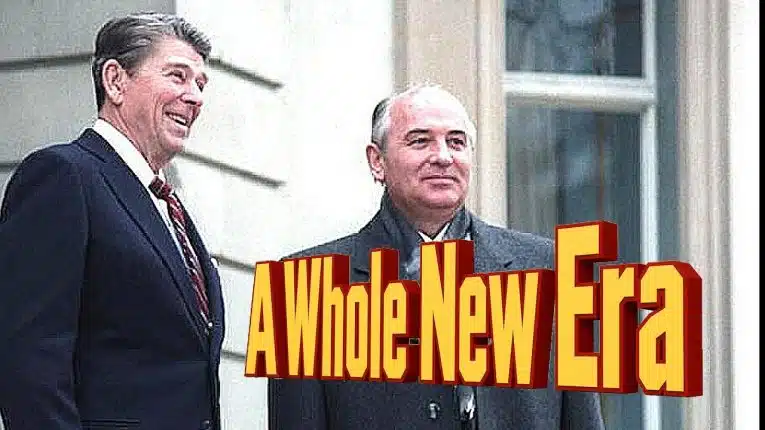
Ronald Reagan used it again in 1987 and 1988 when Iran was bombing oil tankers in the Persian Gulf. This also resulted in Operation Earnest Will from July 1987 to September 1988 as the U.S. Navy escorted Kuwaiti oil tankers in international waters during the Iran-Iraq War to protect the freedom of the seas.
Once again, the U.S. engaged in hostilities with Iran in June 2025 when President Trump ordered the bombing of the government’s nuclear weapons facilities, which the President also provided notice to Congress of under the War Powers Act.
And again on March 2, President Trump invoked the War Powers Act in the current Operation Epic Fury, stating in part, “at my direction, on February 28, 2026, United States forces conducted precision strikes against numerous targets within Iran including ballistic missile sites, maritime mining capabilities, air defenses, and command and control capabilities. These strikes were undertaken to protect United States forces in the region, protect the United States homeland, advance vital United States national interests, including ensuring the free flow of maritime commerce through the Strait of Hormuz, and in collective self-defense of our regional allies, including Israel.”
Since then, Senate Democrats have brought five War Powers Act resolutions up for votes to terminate U.S. military operations against Iran — S.J. Res. 104, S.J. Res. 118, S.J. Res. 116, S.J. Res. 123 and S.J. Res. 114 — and all were defeated by the Senate. Similar resolutions in the House — H. Con. Res. 38 and H. Con. Res. 40 — were also defeated, every single one, as Republican-led Congressional majorities instead sided with President Trump.
Now, with the ceasefire in place, the White House is saying the naval blockade itself could “go on for months”. On April 29, the President praised the efforts of the U.S. Navy, stating, “The blockade is genius, OK? The blockade has been 100 percent foolproof… Now, they have to cry uncle, that’s all they have to do. Just say, ‘We give up.’”
Clearly, President Trump wants to continue the military’s mission to keep pressure on Iran to end its nuclear weapons program and to protect the freedom of the seas with the blockade. But it could take some time.
With Operation Epic Fury’s combat operations actually ended on April 8 with the ceasefire, and the ongoing naval blockade occurring in international waters that could go on for months — longer than the 90 days contemplated under the War Power Act — then the blockade is looking more like 1987 and 1988’s Operation Earnest Will — called Military Operations Other Than War — than it does the preceding combat mission.
This helps the President keep the pressure up and sends a clear signal to Iran that this could go on indefinitely while they cannot ship any oil to fuel their economy.
The alternative might be to tell Iran to just hang on for another month, that there’s an arbitrary legal deadline coming up that Democrats in Congress want to wring their hands about, acting as human shields for the Islamic Revolutionary Guard Corps (IRGC), which they surely will come June 1, when 90 days have passed.
Here’s what Tehran needs to know: Even if such a resolution somehow passed, the President will almost certainly veto it, and Congress would fail to override the veto, just like in 2020 when the same thing happened — and the blockade will continue.
And then there’s always Power Plan Day that could come later in some new operation (see above the multiple War Powers Act operations against Iran over multiple administrations without Congressional authorization).
At the end of the day, the Democrats will not be able to save the IRGC if that’s what they’re hoping for so they can just get it out of their heads. Instead, the reality appears to be to make a deal with President Trump, end their 47-year-long war and their nuclear weapons ambitions — or bust — and the President and the military loves to bust.
Robert Romano is the Executive Director of Americans for Limited Government.