
The start of the early 2028 presidential election campaign season is still a good six to twelve months away, but early polls looking at the landscape offer some surprising, and not so surprising, data on the potential 2028 Democratic contenders.
While the path for Republicans is clearer — with Vice President J.D. Vance at the top of the list for Republicans and likely to announce a bid for president as the campaign season approaches — the Democratic field is crowded and murky.
Vice President Vance told CBS News in June that he is focused on the midterms and will decide whether to announce an official run for president after the November elections.
For Democrats, there is a list of at least seven potential presidential candidates being floated already, and public opinion surveys are beginning to gauge early interest in names like former Vice President Kamala Harris, California Gov. Gavin Newsom, and Pennsylvania Gov. Josh Shapiro.
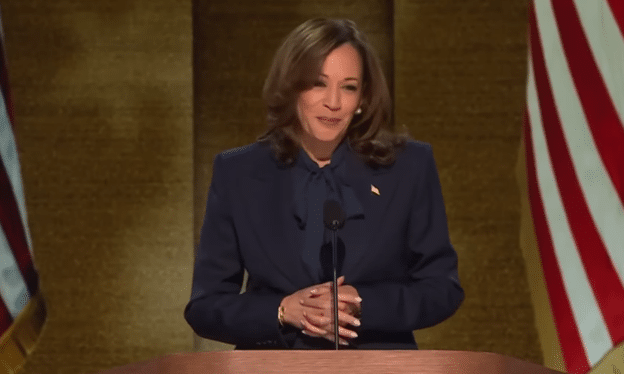
The Harvard CAPS-HarrisX poll conducted among 2,100 registered voters Aug. 28-30 found that among Democrats, failed 2024 presidential candidate Kamala Harris tops the list, securing 42 percent of the vote in a very early 2028 poll.
California Gov. Gavin Newsom comes in second, securing 18 percent of the vote among Democrats, and former Secretary of Transportation Pete Buttigieg — who ran in the 2020 Democratic primaries — secures nine percent. Congresswoman Alexandria Ocasio-Cortez also earns nine percent of the vote, and Georgia Sen. Jon Ossoff and Pennsylvania Gov. Josh Shapiro each earn seven percent of the vote among Democrats.
The Economist/YouGov survey from Aug. 21-24, conducted among U.S. citizens, not just Democrats or registered voters, points to issues Harris and Newsom will face.
While Harris does have the greatest name recognition of all seven candidates in the lineup and enjoys a decent baseline approval rating (39 percent of U.S. citizens hold a favorable view of her), her net approval rating is -11 percentage points, as 50 percent of the country holds a negative opinion of Harris.
The survey finds that the two Democratic candidates with the greatest name recognition — Kamala Harris and Gavin Newsom — are facing steep disapproval ratings.
Kamala Harris may enjoy the greatest name recognition, but she is also risky, with half the country decidedly taking a negative view of her. Harris scores well with Black voters (earning 64 percent favorability) and liberals (earning 75 percent favorability), but among most demographics her net favorability is in the negative.
Among college-educated voters, Harris’ net favorability underwater by two points, with 49 percent of college-educated voters holding a negative view of her while 47 percent hold a positive view. Harris also has a net negative approval rating among young voters, with 43 percent of voters under age 30 holding a negative view of her and 42 percent holding a favorable view. She is underwater by 13 points (47 percent to 34 percent) among independents. While Harris has national name recognition from her tenure under Joe Biden and failed 2024 bid, the public has a generally negative view of her, making a Harris rerun a risky choice for Democrats.
The Democratic contender with the highest net approval rating, and one of the few potential contenders with a positive net approval rating, is Georgia Sen. Jon Ossoff, whose name has been floated as a potential 2028 candidate.
While Sen. Ossoff insisted he has “zero interest” in running for president in late August, voters appear to hold a somewhat favorable view of the Georgia Democrat. 25 percent of Americans say they have a favorable view of Ossoff and 18 percent say they have a negative view. A full 57 percent are unsure of their opinion.
College-educated voters appear favorable toward Ossoff, giving him a net approval rating of 13 points, 34 percent to 21 percent. Independents approve of Ossoff by one point, 21 percent to 20 percent.
Another Democrat with a relatively high net positive approval ratings is Kentucky Gov. Andy Beshear. Beshear’s net approval rating is positive by seven points, with 24 percent of Americans holding a positive view of the governor and 17 percent holding a negative view. Beshear polls well among Black voters, with his net approval rating positive by 18 points (26 percent to 8 percent). He also polls well among college-educated voters, with his net approval rating positive by 15 points (32 percent to 17 percent). Beshear’s net approval rating is positive among independents by three points, 20 percent to 17 percent.
Pennsylvania Gov. Josh Shapiro also has a net positive approval rating by five points. Like Ossoff, Shapiro faces a significant share of Americans who don’t know how they feel about him — 47 percent — but his approval rating is positive 29 percent to 24 percent. Shapiro polls well among women with a net favorability rating of 10 points, 28 percent to 18 percent, as well as Black voters and Hispanics. His approval rating is positive by 18 points among Black voters, 31 percent to 13 percent, and positive by 16 points among Hispanics (34 percent to 18 percent). His approval rating is negative by three points (25 percent to 22 percent) among independents.
Former Secretary of Transportation Pete Buttigieg, who ran in the Democratic primaries in 2020, also has a narrowly positive approval rating. Buttigieg has an approval rating that is positive by a single percentage point, 33 percent to 32 percent, with 35 percent undecided.
Women, Hispanics, and young voters view Buttigieg positively, with his net approval rating among women positive by seven points (32 percent to 25 percent), his approval rating among Hispanics positive by seven points (31 percent to 24 percent), and his approval rating among young voters positive by nine points (30 percent to 21 percent). Buttigieg polls relatively well among independents, but his approval rating is still negative by four points, 31 percent to 27 percent.
California Gov. Gavin Newsom — floated as a top pick for Democrats — may have broader recognition than Ossoff and Shapiro, but his approval rating is distinctly in the negative as of this writing. Only 28 percent of Americans don’t know how they feel about Newsom, while 41 percent hold an unfavorable view of the governor and 31 percent hold a favorable view.
Even among coalitions that tend to favor coastal Democrats, the California governor is slightly in the negative. His approval rating is underwater by six points among college-educated voters (46 percent to 40 percent) and underwater by 12 points among young voters (35 percent to 23 percent). The data points to a particularly steep uphill battle for Newsom among independents. His approval rating is underwater by 17 points (41 percent to 24 percent) among independents.
New Jersey Sen. Cory Booker’s approval rating is split evenly, with 30 percent of Americans holding a positive view of him and 30 percent holding a negative view. A full 40 percent aren’t sure how they feel. Booker does well among Black voters, with a net approval rating of 36 points, 46 percent to 10 percent. However, his approval rating is underwater among white voters by seven points (35 percent to 28 percent). Booker’s approval rating among college-educated voters is positive by five points, 40 percent to 35 percent. His approval rating among independents is negative by four points, 28 percent to 24 percent.
We can expect to see Democratic contenders announcing their bids for president beginning in spring 2027, and the way the midterm elections shake out could determine who Democrats decide to rally around. One takeaway is clear: this far in advance, Democrats appear to believe a Kamala Harris rerun is the most preferred choice, and frankly, if Democrats decide to do that, it could be a gift to the GOP. Harris has wide name recognition but is starting off at a significant approval disadvantage. Other candidates with a lower share of the public decided about them — such as Ossoff and Beshear — have decent approval ratings but low recognition. For them, exposure and campaign season could go either way.
Democrats will need to decide on a strategy for 2028 — especially since for the first time since 2016, they won’t be able to run on being the only alternative to President Donald Trump any longer.
Manzanita Miller is the senior political analyst at Americans for Limited Government Foundation.