

While Democrats have maintained a lead in most midterm polls over the past three months, there are signals that the blue wave could be somewhat blunted in November. An NBC News survey shows Democrats ahead by less than they were at the same point in 2018, and a New York Times poll from Maine shows Democrats’ plans to secure the Senate could be thrown into jeopardy. On top of that, Economist/YouGov polling shows significant portions of swing voters are uncommitted or planning to sit out the election.
The NBC News survey of 1,000 registered voters conducted Sept. 11–15 shows that, despite maintaining a lead, Democrats are leading by less than they were in polling at this point in the 2018 midterm cycle when Democrats won the U.S. House.
The NBC News survey has Democrats leading Republicans by five percentage points, 50 percent to 45 percent. That 5-point lead is less than half of what Democrats led by in polling from the same period in 2018, when the party held a 12-point lead according to NBC News.
Looking back at the 2022 midterm cycle, NBC News polling from September had Democrats and Republicans in a virtual tie, 46 percent to 46 percent.
The latest Economist/YouGov survey of registered voters conducted Sept. 18–21 has Democrats leading Republicans by nine points, 45 percent to 36 percent. This is one of the largest leads for Democrats in recent surveys. However, the survey shows significant portions of swing voters are uncommitted or planning to sit out the election compared to how they felt in the fall of 2022.
In the Economist/YouGov survey from Sept. 24–27, 2022, 18 percent of voters aged 18–29 said they were unsure who they would support or that they would not vote. Today, that number has jumped to 24 percent. Democrats’ lead has also shrunk, with Democrats leading by 31 percentage points among young people in 2022 (56 percent to 25 percent) and now leading by 26 points (49 percent to 23 percent).
Democrats have opened up a wide lead among independents compared to 2022, leading among independents by 14 points (39 percent to 25 percent) after Republicans led among independents by five points in late September 2022. However, a full 30 percent of independents are still unsure who they’ll support or are promising not to vote.
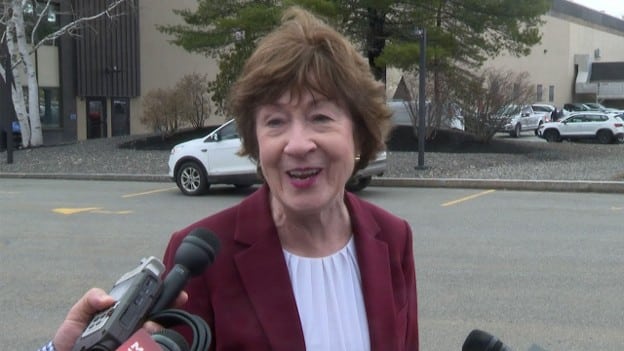
On top of these warning signals, Democrats’ chances in the U.S. Senate could be in jeopardy, according to a New York Times/Siena College poll released this week. The survey, conducted among 619 voters in Maine Sept. 15–22, shows GOP Sen. Susan Collins ahead of Democrat Troy Jackson by three points, 49 percent to 46 percent.
Jackson has called for “Medicare for All” and getting rid of Immigration and Customs Enforcement (ICE), and he trails Collins in approval.
The Times poll shows Sen. Collins with a net approval rating of +3 points, with 51 percent of voters holding a favorable view of her and 48 percent holding an unfavorable view. Jackson has a net approval rating of -8 points, with 49 percent of voters holding an unfavorable view of him while 41 percent hold a favorable view.
While the Times notes the survey is an outlier, the poll places Democrats behind in a relatively Democratic-leaning state that could make securing the Senate a lot harder if they lose that seat. As Times chief political analyst Nate Cohn points out, if Democrats lose Maine, they will have to win Senate seats in at least three states that President Trump won by wide margins in 2024, such as Ohio, Iowa, Alaska, Texas, or Kansas.
So why are Democrats at risk of alienating swing voters and possibly forfeiting Senate seats in key states?
There is evidence that voters are not thrilled with the Democratic Party’s radical lurch to the left. The New York Times/Siena College poll of registered voters from Sept. 15 shows half of voters say the Democratic Party is too far to the left. Thirty-six percent say the party is not too far either way, and nine percent say the party is too far to the right. Forty-three percent of young people admit the Democratic Party is too far to the left, while 37 percent think it is not too far in either direction.
Just over a third of Hispanics (34 percent) and 17 percent of Black voters say the Democratic Party is too far to the left. Independents say by 20 points (53 percent to 33 percent) that the Democratic Party is too far left.
As Democrats have shown they have no issue nominating far-left candidates like Lt. Gov. Peggy Flanagan in Minnesota, who has called for the complete defunding of ICE, Abdul El-Sayed in Michigan, who is running on a platform of abolishing ICE and implementing a wealth tax, or Democratic Socialist Melat Kiros in Colorado, a portion of voters are beginning to question how far the party will go.
Democrats are leading in most recent surveys, but the party’s left-wing policies and embrace of Democratic Socialist candidates have driven the country to say they are too far to the left.
What is more, significant shares of swing voters are saying they aren’t sure who they’ll support or are pledging to sit out the midterms. With Maine possibly thrown into the balance, Democrats will have to fight twice as hard to secure Senate wins in states that were Trump-friendly in 2024.
The blue wave Democrats hope for could shift the balance of power in Washington in November, but it may be smaller than they anticipate. Long-term, the party is in trouble. Democrats have shifted the Overton window by nominating Democratic Socialists, and if they attempt to turn back, that move will alienate the radical wing of the party. At the same time, this leftward lurch is costing the party with swing voters.
Manzanita Miller is the senior political analyst at Americans for Limited Government Foundation.