
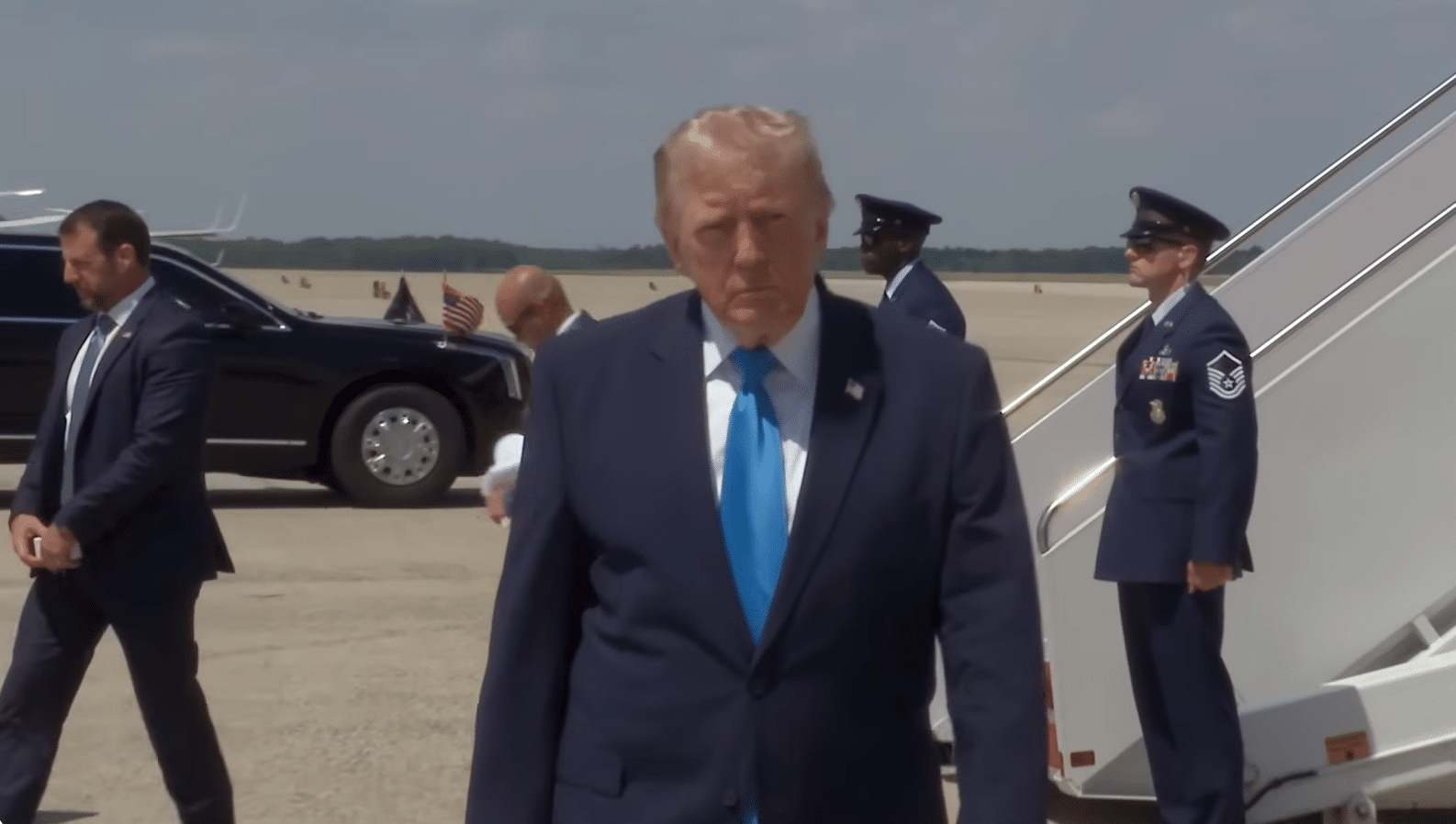
President Donald Trump committed to slashing foreign aid to save American taxpayers money, cut foreign waste, and remove funding from programs that do not extend American values in his second term, resulting in the lowest level of foreign aid flowing out of the country in over two decades.
The Pew Research Center’s analysis of federal trends released July 21 reveals that foreign aid plummeted in the fiscal year that ended Sept. 30, 2025, to the lowest level since 2004. The U.S. still funneled out $47.3 billion in foreign aid according to data from ForeignAssistance.gov. But when adjusted for inflation, this marks the lowest number for foreign aid since fiscal year 2004 and represents billions in savings and resource reallocation for U.S. taxpayers.
While progressives and the mainstream media attempted to portray President Trump’s adjustment of federal foreign spending as harmful or radical, the vast majority of voters agree with the strategy. Even among key Democratic factions — young people, Latinos, and college-educated voters — Americans express a desire to see foreign aid cut. Among Democratic voters, less than half want to see foreign aid increased.
The latest Economist/YouGov survey reveals Americans are in favor of the Trump Administration’s actions to continue holding the federal government accountable. Public opinion on foreign aid has soured significantly as Americans have become aware of the blatant waste, fraud, and abuse they have been forced to fund — including $1.5 million to “advance diversity, equity, and inclusion” in Serbia and $2 million for sex changes and “LGBT activism” in Guatemala.
Now Americans say by a margin of 26 points — 49 percent to 23 percent — that foreign aid should be decreased rather than increased. The largest share of Americans — 29 percent — want to see foreign aid decreased “a lot,” according to the survey. Only 11 percent want to see foreign aid increased “a lot,” with 22 percent of Harris voters and 3 percent of Trump voters supporting increased foreign spending.
There are wide partisan divides, but even among Harris voters, Democrats, and liberals, less than 50 percent want to see foreign aid spending increased, reflecting a change in national priorities.
Republicans want to see foreign aid spending slashed by a full 58 percentage points, 69 percent to 11 percent. Independents largely agree, saying foreign aid should be cut by a margin of 33 points, 51 percent to 18 percent. While Democrats want foreign aid increased by 12 points, 39 percent to 27 percent, that is still less than half of Democrats who want to see foreign aid increased.
Swing voters broadly want to see foreign aid cut. Latinos want to see foreign aid reduced by eight points, 39 percent to 31 percent, with the largest share of Latinos — 26 percent — saying they want to see foreign aid cut a lot. Only 13 percent want to see foreign aid increased a lot.
Black voters are split, with 32 percent wanting to see foreign aid cut and 32 percent wanting to see foreign aid increased. The largest share — 18 percent — want to see foreign aid decreased slightly.
Young people narrowly want to see foreign aid cut, with young voters saying by a three-point margin, 31 percent to 28 percent, that they want foreign aid cut.
College-educated voters, a group that historically leans to the left, want to see foreign aid reduced by 22 percentage points, 50 percent to 28 percent. Non-college voters are broadly in favor of reducing foreign aid, saying they want foreign aid reduced by 30 points, 49 percent to 19 percent. It is worth noting how closely non-college and college-educated voters are aligned on slashing foreign aid, a rare occurrence that highlights the bipartisan nature of the issue.
While U.S. foreign aid has been slashed to the lowest number since 2004 in President Trump’s second term, that does not mean the U.S. is no longer contributing billions to economic development and military assistance to other countries. According to Pew Research Center analysis of federal data, the U.S. gave $6.7 billion to Ukraine, $3.3 billion to Israel, $1.7 billion to Jordan, and $919 million to Ethiopia in FY 2025. Other countries received several million.
No one, or at least no one strongly associated with the current administration, is saying the United States should have zero role in development in other countries. Used strategically, a certain amount of foreign aid can extend American interests and strengthen relationships. What the administration is pointing out, and correcting, is the billions in waste, fraud, and abuse that have been funneled out of the U.S. for decades.
While the mainstream media framed President Trump’s slashing of foreign aid and relentless auditing of the federal budget as radical and out of line with the people, it is they who are out of touch. Continuing to audit the stream of taxpayer dollars and slash foreign aid for nonsensical projects is perhaps one of the most popular Trump policies, second only to deporting illegal aliens with criminal records. Once again, what the mainstream political establishment labeled as politically unfeasible was what the people wanted all along.
Manzanita Miller is the senior political analyst at Americans for Limited Government Foundation.