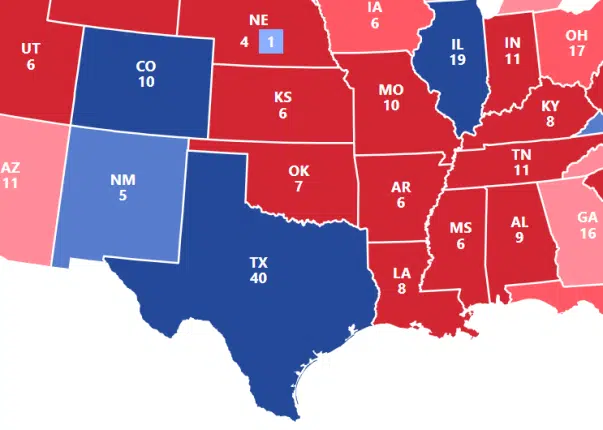

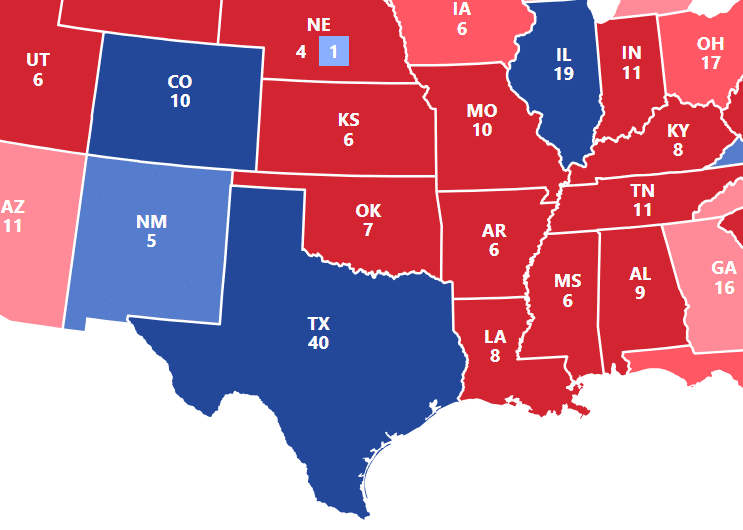
Texas Republican Governor Gregg Abbott lost independents in the 2026 gubernatorial election to Governor-Elect Gina Hinojosa 59 percent to 38 percent, according to the 2026 CNN voter poll, a shocking 21-point margin. Texas Attorney General Ken Paxton did even worse in the exit poll, losing independents to Democratic Senator-elect James Talarico 64 percent to 33 percent.
There were also some party crossover votes, with 9 percent of Republicans voting for Hinojosa and 11 percent voting for Talarico.
The combination led to the rout of both Abbott and Paxton, each losing 52.8 percent to 45.6 percent and 55.1 percent to 43 percent, respectively.
That, just two years after President Donald Trump had easily won the state by more than 13 points over former Vice President Kamala Harris, 56.14 percent to 42.46 percent. In the 2024 CNN exit poll, Trump had won independents 49 percent to 48 percent.
The collapse of independent support, of course, is tempered in part by diminished turnout among Republican-leaning independents who live in red areas. The way you can tell that is Democrats went from 26 percent of the electorate in 2024 to 33 percent in 2026. Republicans remained at 38 percent of the electorate.
Overall, turnout fell from roughly 11.4 million in 2024 to about 9.9 million in 2026. That’s typical in midterms, as is the downturn disproportionately affecting the President’s party.
Similar patterns are seen nationwide in the Nov. 3 election wherein Democrats could reach 56 seats in the Senate and 260 seats in the House, according to a Polymarket projection, amid voter anxieties over continued inflation and high oil and gas prices after the escalation of the Iran war. In the CNN exit poll, Republicans lost independents 58 percent to 38 percent — a 20-point rout.
Nationwide, the electorate shifted from 35 percent Republican, 31 percent Democrat and 34 percent independent in 2024 to 35 percent Democrat, 32 percent Republican and 33 percent independent in 2026. So, slightly more Democratic and Democratic-leaning independent turnout, and less Republican and Republican-leaning independent turnout.
In 2028, turnout will be greater, including in Republican areas, but the drift from independents and Republicans could still be present if the issues that animated voters on Nov. 3 are again in play in two short years.
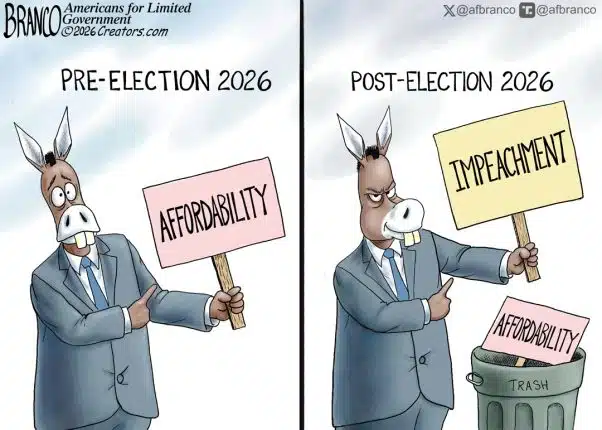
In 2024, economic anxieties from 2021 to 2023 inflation bubbled over into the election that propelled Trump back into the Oval Office. In 2028, anxieties from 2025 and 2026 could ultimately bubble over very similarly as Americans ask the key question — are they better off?
On Nov. 3, the answer was no. In 2006, the answer was no, too, following a Republican wave election in 2004, the GOP then lost the House and Senate as the Iraq War grinded on, and in 2008 high oil prices, the housing market collapse and Great Recession all coalesced into the wipeout that propelled Barack Obama and Democratic supermajorities into Congress.
Barring a great turnaround on the inflation front and far better approval from independents and Republicans, 2028 could make 2008 look like a walk in the park. Stay tuned.
Robert Romano is the Executive Director of Americans for Limited Government Foundation.