
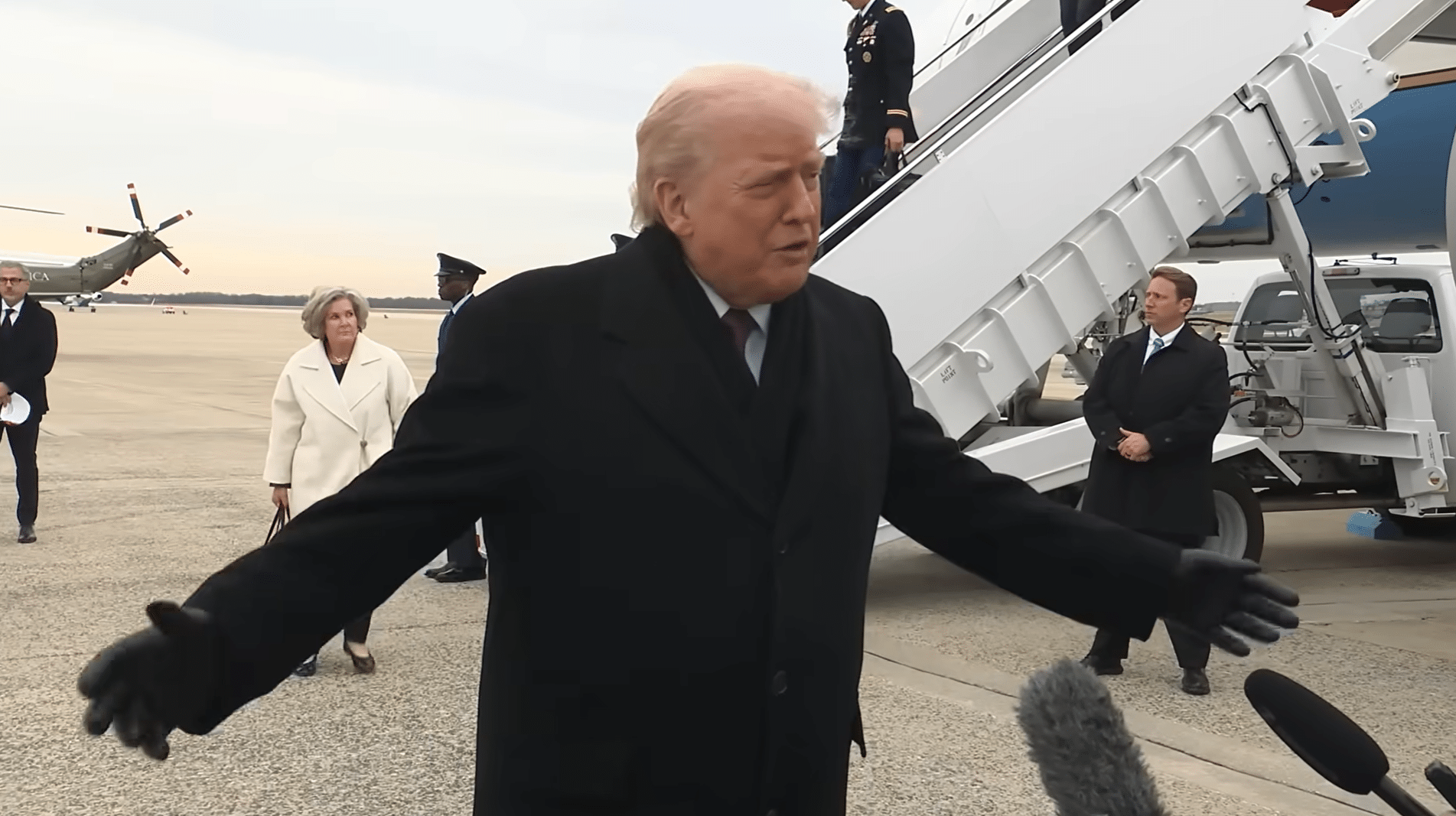
“[T]hese brave men and women who serve DHS deserve to get their paychecks. The President wants to see that happen and he wants Congress to come back to get it done.”
That was White House Press Secretary Karoline Leavitt on March 30 noting that President Donald Trump may be calling back Congress to complete its work on Department of Homeland Security funding, which has been shut down for a record 46 days, after the House and Senate passed opposing bills funding the department.
The House version fully funds the department for 60 days while the Senate version funds everything except for Immigration and Customs Enforcement (ICE) and U.S. Border Patrol — who are currently funded via the One Big Beautiful Bill Act — through Sept. 30.
At that point, the President put forward a March 27 memorandum to pay Transportation Security Administration (TSA) workers despite Congressional inaction “I hereby direct the Secretary of Homeland Security, in coordination with the Director of the Office of Management and Budget, to use funds that have a reasonable and logical nexus to TSA operations to provide TSA employees with the compensation and benefits that would have accrued to them if not for the Democrat-led DHS shutdown, consistent with applicable law, including 31 U.S.C. 1301(a).”
President Trump did the same thing during the 2025 government shutdown to pay the U.S. military on Oct. 15, 2025 via a very similar memorandum: “I direct the Secretary of War, in coordination with the Director of the Office of Management and Budget, to use for the purpose of pay and allowances any funds appropriated by the Congress that remain available for expenditure in Fiscal Year 2026 to accomplish the scheduled disbursement of military pay and allowances for active duty military personnel, as well as for Reserve component military personnel who have performed active service during the relevant pay period. Funds used for military pay and allowances during the current lapse should be those that the Secretary of War determines are provided for purposes that have a reasonable, logical relationship to the pay and allowances of military personnel, consistent with applicable law, including 31 U.S.C. 1301(a).”
That was the first time a president had reprogrammed other moneys for excepted employees’ pay during a government shutdown. The March 27 memorandum for TSA workers marks the second time.
With the pressure now off — TSA workers are to be paid and security lines at airports shortening, Congress then skipped town for a two-week vacation. But the President can call them back.
Under Article II, Section 3 of the Constitution the President “may, on extraordinary Occasions, convene both Houses, or either of them…”
Maybe the sooner the better. Besides the TSA, who finally got paid on March 30, still fully unpaid through the shutdown are the Federal Emergency Management Agency (FEMA), the Secret Service, the Coast Guard, the Cybersecurity and Infrastructure Security Agency and others. They’re still working without pay.
But they are virtually guaranteed to eventually get paid. Under federal law, all federal employees, excepted and unexcepted workers, are already legally guaranteed backpay with interest, but only after the shutdown ends.
In the meantime, the Anti-Deficiency Act provides for the excepted employees to continue working without pay during a lapse in appropriations: “each excepted employee… is required to perform work during a covered lapse in appropriations.” So, during the shutdown, they’re not supposed to be paid.
But involuntary servitude is strictly forbidden by the Thirteenth Amendment: “Neither slavery nor involuntary servitude, except as a punishment for crime whereof the party shall have been duly convicted, shall exist within the United States, or any place subject to their jurisdiction.”
So, after a prolonged shutdown, no matter what, the excepted employees will ultimately have to be paid, federal law or no law, given the clarity of the Constitution.
In the case of an indefinite lapse of funding, which is exactly what we have now, it definitely appears to be unconstitutional to not pay them while requiring that they work, and so, under the emergency, no matter what, the President will ultimately have to pay them for the time they worked.
Now, it could be that Congress also wants to sue the President over paying the TSA workers when Congress has not explicitly authorized him to do so, citing Article I, Section 9 of the Constitution that states: “No Money shall be drawn from the Treasury, but in Consequence of Appropriations made by Law…”
So, which is it? No one can be forced to work without pay, or the government employees cannot be paid unless Congress authorizes it?
Both things can be true: The President cannot pay workers that Congress has not appropriated money for and Congress cannot compel people to work without pay. That would make the Anti-Deficiency Act unconstitutional.
If so, even if courts later find out that compelling excepted workers to remain on the job was unconstitutional, and must not happen again, they could also have to find in so forcing them to work that they still had to be paid, likely from the Judgment Fund under 31 U.S. Code Sec. 1304(a): “Necessary amounts are appropriated to pay final judgments, awards, compromise settlements, and interest and costs specified in the judgments or otherwise authorized by law when—(1)payment is not otherwise provided for; (2)payment is certified by the Secretary of the Treasury; and (3)the judgment, award, or settlement is payable—(A)under section 2414, 2517, 2672, or 2677 of title 28; (B)under section 3723 of this title; (C)under a decision of a board of contract appeals; or (D)in excess of an amount payable from the appropriations of an agency for a meritorious claim under section 2733, 2733a, or 2734 of title 10, section 715 of title 32, or section 20113 of title 51.”
And that might be the solution to these never-ending series of government shutdowns to nowhere. Shutdowns in 1995, 1996, 2013, 2018, 2019, 2025 and now 2026 failed to achieve any meaningful changes to federal law. In the meantime, if Congress thought that nobody would show up for work at all — including vital security personnel — they might not utilize shutdowns, or would otherwise put paying those excepted employees including the military down as mandatory spending going forward.
Congress cannot vote to take slaves, but it will keep happening so long as the practice remains unchallenged — which President Trump is finally doing.
Robert Romano is the Executive Director of Americans for Limited Government.