
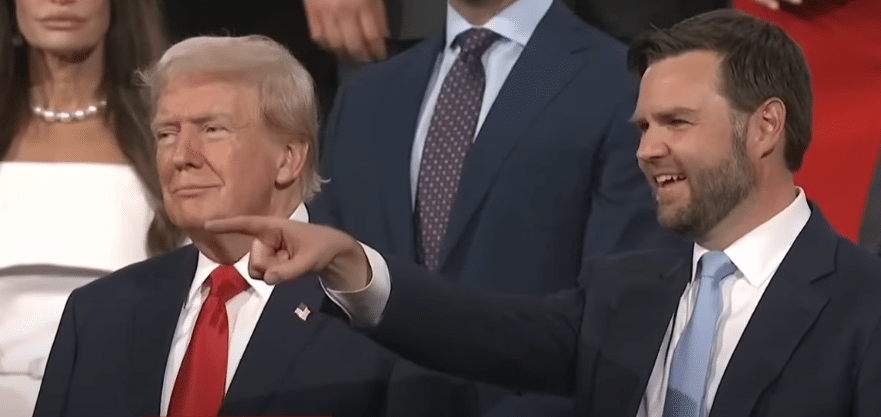
The Congressional midterm elections of 2026 are just a few months away, and once they come and go, the 2028 presidential cycle to succeed President Donald Trump will begin almost immediately, with one of the biggest decision-makers being Vice President J.D. Vance.
While Vance, Secretary of State Marco Rubio, or whoever is nominated in 2028 won’t technically be running for a third consecutive term for Republicans — President Trump was elected in 2016 and 2024 to non-consecutive terms — judging by the President’s approval ratings, standard voter fatigue attributable to second term presidencies set in almost instantly in 2025.
If we treat Trump as a second-term president with standard voter fatigue of the ruling party setting in (I think we should), it could be the only thing worse than nominating a sitting vice president would be to nominate somebody else in a wide field.
The reason for that could be how the modern nominating process has unfolded, unquestionably favoring sitting vice presidents, with party nominations in Richard Nixon in 1960, Hubert Humphrey in 1968, George H.W. Bush in 1988, Al Gore in 2000 and Kamala Harris in 2024 going to the incumbent vice president. In the post-World War II era, they’re undefeated. If they run, they win the nomination.
Even if you accept 1960, 1968 and 2024 as party convention choices and not primary choices, 1988 and 2000 still show that sitting vice presidents have a significant advantage in the nominating process, and when considering popular vote performance in the general election, still appear to do the best at competing for the elusive third term.
When sitting vice presidents or vice presidents who became president have run for the third consecutive or more term (defined by consecutive terms with the same party ruling), the elections were competitive or beneficial for the incumbents if not always successful: Harry Truman (a sitting president who had succeeded Frankling Roosevelt after he died) won 49.5 percent to Thomas Dewey’s 45 percent in 1948, Richard Nixon got 49.55 percent to John Kennedy’s 49.77 percent in 1960, Hubert Humphrey got 42.7 percent of the vote to Richard Nixon’s 43.4 percent in 1968, Gerald Ford (another sitting president who had succeeded Nixon) got 48.4 percent to Jimmy Carter’s 50 percent in 1976, George H.W. Bush won with 53.4 percent in 1988 to Michael Dukakis’ 45.7 percent and Al Gore got 48.4 percent to George W. Bush’s 47.9 percent (and barely lost) in 2000.
If you include Truman and Ford, there were two wins out of six (33 percent), and the popular vote margins were +1.53 points for the incumbent party, or an average 48.63 percent of the popular vote. If you remove Truman and Ford, there’s still one win out of four (25 percent) at about the same +1.58 points, or an average 48.16 percent of the popular vote. None of those were landslides except for Bush’s 1988 win.
Compare that to non-vice presidents running for their party’s third or more term: Adlai Stevenson who only got 44.3 percent of the vote to Dwight Eisenhower’s 55.2 percent in 1952, John McCain only got 45.7 percent to Barack Obama’s 52.9 percent in 2008 and the one who did the best was Hillary Clinton with 48 percent to President Trump’s 46 percent in 2016.
On average, the non-vice president candidates running for a third or more term lost each race (0 percent win rate) on average by 5.36 points or an average of 46 percent of the popular vote. Two out of three were landslides.
The incumbent vice presidents who ran and won were John Adams in 1796, Thomas Jefferson in 1800, Martin Van Buren in 1836 and George H.W. Bush in 1988. The losers were John Breckenridge in 1860, Richard Nixon in 1960, Hubert Humphrey in 1968, Al Gore in 2000 and Kamala Harris in 2024. So it’s a 55.5 percent chance of losing. If you subtract Jefferson from the mix (he was in the opposing party against Adams and so the question before voters wasn’t really about extending a party’s reign), then losing rises to 62.5 percent.
It is therefore somewhat rare for the sitting vice president to run for president — it only happens about 15 percent of the time, or 9 out of 59 elections. Or 9 times out of 46 presidencies, or 19.5 percent.
In the modern era, since constitutionally term-limiting presidents and with Truman win’s in 1948 (which was the fifth consecutive term for Democrats), only Republicans have successfully achieved three consecutive terms with the wins in 1980, 1984 and 1988.
Otherwise, Republicans had two terms with Eisenhower, then Democrats had two terms with Kennedy and Johnson, then Republicans with Nixon and Ford, next Democrats with Clinton, then Republicans with W. Bush, then Democrats with Obama and now Republicans have two non-consecutive terms with Trump.
The real predicter might be running for the third (or more) term. In the modern era, that’s a loser 77 percent of the time — just two times out of nine shots. Everyone else lost.
But Trump is serving non-consecutive terms. Could that help Republicans in 2028? The only other time that happened, after Grover Cleveland, a Democrat, with wins in 1884 and 1892, the country opted to go back to the other party, with William McKinley, a Republican, winning in 1896.
Otherwise, the outcomes appear show that since World War II, the parties have become far more competitive than the dynastic party eras of the 1800s and early 1900s. That, given a choice, enough voters decide two terms is enough for one party and then give the other party a shot as voter fatigue sets in. But sitting vice presidents still do better in general elections regardless of that outcome.
An exception might be Hillary Clinton who was a former Secretary of State when she ran in 2016. Well, Marco Rubio is the current Secretary of State, and so it could be that Rubio might expect to do as well as Clinton did in 2016. If Vance didn’t run, then Rubio might be the strongest Republican candidate to run instead, even if it wouldn’t dramatically improve the odds of Republicans winning. 2028 might be tough for Republicans no matter what.
Because every election is a referendum on the incumbents. And the longer the incumbent party has been in power, the more support they’ll lose even when the economy is doing great. When running for the third term and beyond, you want a strong showing to prevent adverse outcomes in Congress. So for example, Republicans might have been far better off if Dick Cheney had run in 2008 and Democrats might have been better off if Joe Biden had run in 2016.
It’s all trivial, though, as the nomination will be decided largely by the current vice president: Vance. So, if Vance wants the GOP nomination, he likely gets it — he leads the primary on average by 18.7 points.
But after even two non-consecutive Trump terms, with inflation bubbling right now (it just started outpacing incomes again), it could very well end up being a difficult race for Republicans, but if Vance runs, maybe a closer race than a contested primary with several challengers (partisan voters tend to rally around the sitting vice president in primaries that tends bode better for the general election).
In that context, Vance might still be the GOP’s best shot. In fact, in modern history the only two candidates who won the third or more terms besides Franklin Roosevelt were Truman in 1948 and H.W. Bush in 1988. Otherwise sitting vice presidents overperformed non-vice president candidates running for the third term looking at popular vote. No sitting VP lost in a landslide whereas Stevenson in 1952 and McCain in 2008 did. That said, if Rubio did as well as Hillary Clinton he might still lose but that maybe it was close, but on the other hand, that might be about as well as Vance would have done, too. But it’s dealer’s choice; if Vance runs he likely gets the nomination.
President Trump’s approval being low is another factor to consider. But sitting vice presidents might be immune. While Kamala Harris got 48.3 percent in 2024 with former President Joe Biden at 37 percent approval, Al Gore did no better at 48.4 percent in 2000 with former President Bill Clinton at 63 percent approval. Good economy, bad economy, sitting vice presidents running for their party’s third White House term seem to be reliable, time-tested candidates even if they don’t often win.
Even so, the only thing worse than running a sitting vice president after a party has been in power for two terms might be running somebody else. That seems to be lesson from presidential election history.
Robert Romano is the Executive Director of Americans for Limited Government Foundation.